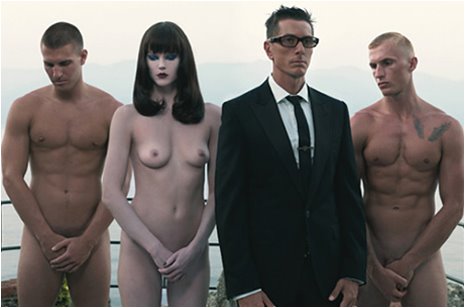
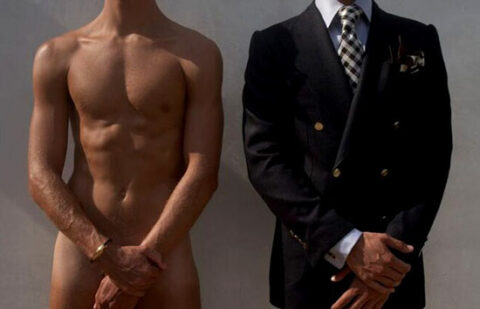
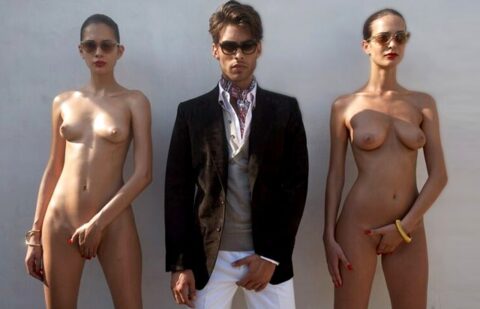
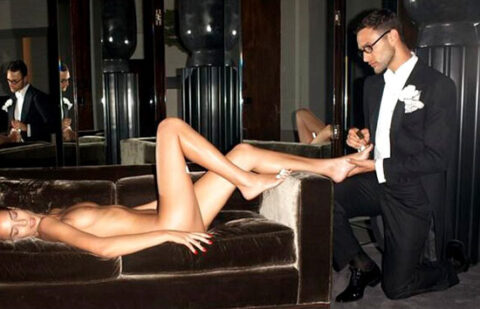
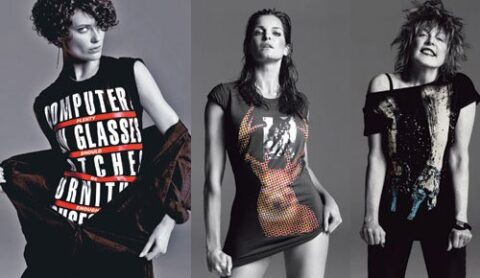
Tom, where did you get your inspiration from?

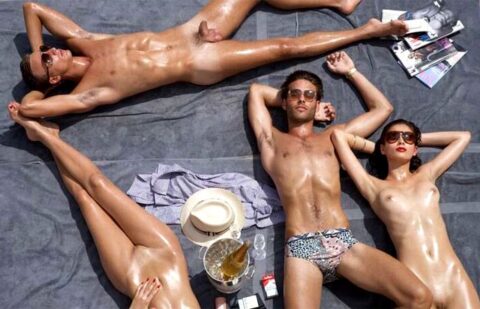
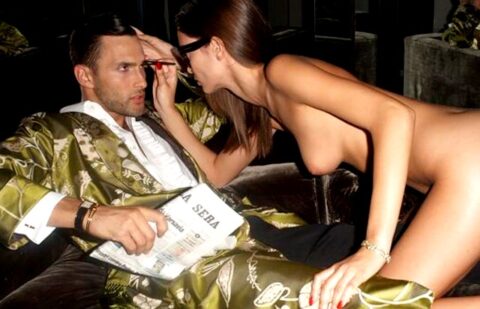
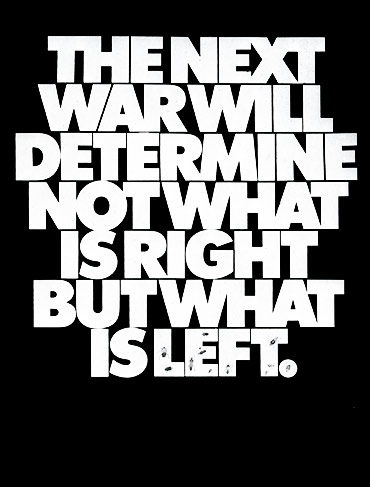
tom ford campaign visual for tom ford


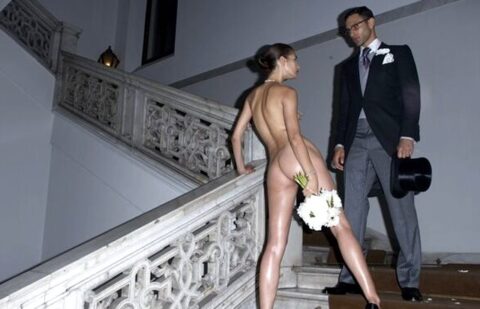
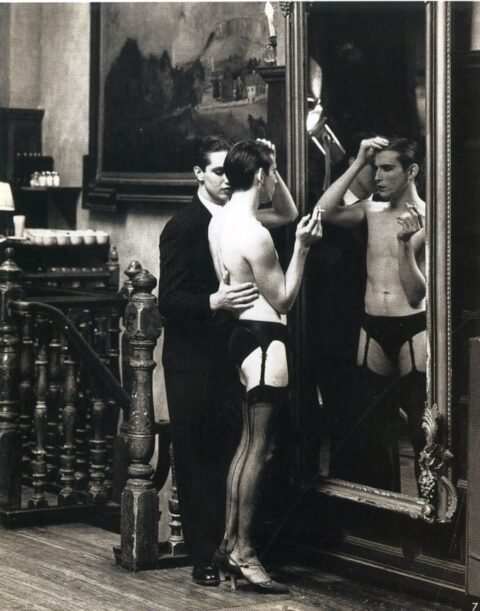
dolce & gabanna visual with shannon click by steven klein

on the post about Tom ford below, every shot seems to be inspired from another, not that it’s a problem, but i was not expecting him to be such a borrower… (you can find the “uncovered” version of steven klein shot on his site but its not really worth it). by pp’

Tom ford goes public


so many brands are about… aaaah sex! at least tom doesn’t apologize for it. I have to give him that. when i first saw the tom ford ads for his first fragrance I thought to myself, it must have been such a release for tom to finally do whatever he wanted after so many years of pandering to gucci’s prudent conservative values of preservation and mindful spending! ever since the vatican took major control of gucci group in 2001, placing archbishop timothy dolan as co-creative director, the company began to expand on its ongoing message of chastity and self preservation. but deep inside, tom knew his calling. he left and the rest is history. I for one am rather anxious to see what tom’s next campaign will be like… perhaps he will dodge the next chapter and finally get to the point. I mean what is the purpose of all these women in these ads after all? maybe he still has a few share holders pulling on the… what do you call that, a string? by dd

Andrew Richardson


Was checking andrew’s correct spelling on the web and saw this.

“This shot was part of a story we did with madonna. The guy in the mirror is Andrew Richardson, who was an assistant stylist. Another picture I took of him eventually ended up on the cover of Italian Vogue, but he was never really a model. I shot him from time to time, and I think he posed for me just for fun, or maybe to meet madonna! Next to him is Mars, a circus performer from Russia. He walked the tightrope.”- Steven Meisel

I cant confirm the facts and having worked with andrew a few times I simply cant see how this could be him, but maybe in younger days… if so he must have looked rather hot… as a boy or a girl. by zz

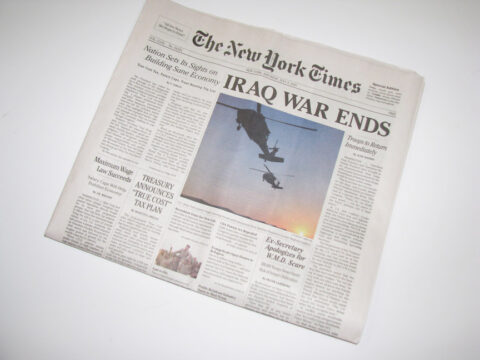
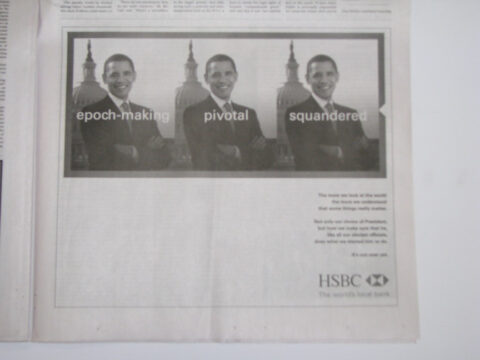
New York Times hoax issue!

Orson Wells would be proud: F is indeed for fake!


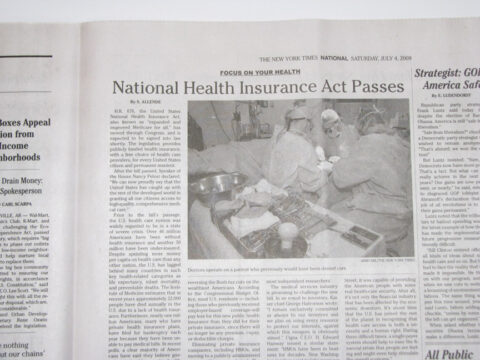
“We caught up with Steve Lambert, an artist who helped organize yesterday’s amazingly elaborate Fake New York Times prank, on the phone last night, as he was basking in the glow of a job well done. “Like all great ideas, it originated at a bar in Brooklyn,” he said of the project, in which 1.2 million copies of a utopian version of the paper, headlined “Iraq War Ends,” were distributed all across the city. “There were just a few people at the table, but we knew immediately the scale we wanted to work on, and that we’d have to tap on a lot of friends. It grew larger and larger.” The project, which was inspired by the candidates’ calls for change during the election, was financed by individual donors, took over a year to complete, he said, and involved thousands of people. Culture-jamming groups like the Yes Men, Code Pink, and Improv Everywhere claimed credit in a press release last night, but “they were just some of the more visible members of the group,” said Lambert. Many of the people who worked on it were individual media professionals, including Times staffers. “There were a few people from the Times — we can’t tell you who they are,” he said. “They’re respectable journalists.” If you missed getting a fake paper, you’ll have to settle with the Website; www.nytimes-se.com there probably won’t be a second edition anytime soon. But stay tuned. “We have other things planned,” said Lambert”–Mike Vilensky NY Timesby dd

art + fashion

it’s not a new observation that the realms of fine art and fashion have been bleeding into one another for quite some time. fashion has more obviously been attracted to the random creativity and legitimacy of visual artists.

and fashion has been bleeding into the realm of fine art in more than visual sensibility, we have ….., and have now big-banged together at the recent met gala for the opening of the fashion based “superheros fashion and fantasy” show. there are times when either side creates an appropriate union but all in all they are definitely cousins visiting on the weekend, and not husband and wife.

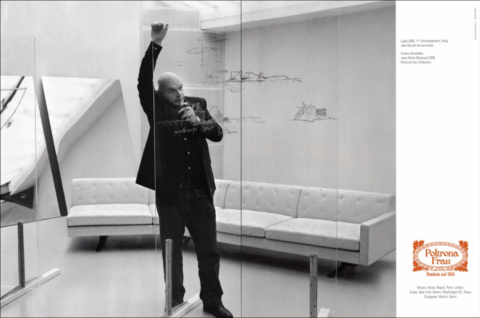
jean nouvel in advertising campaign for poltrona frau

GAP artist edition t-shirts – featuring barbara kruger, jeff koons and marilyn minter. by pp

wine is curious and so are you

alcohol irony: the word alcohol is derived from the arabic language (al kohl or alkuhl). consider the fact that a large proportion of the arab population is forbidden from consuming alcohol. last but not least the oldest wine making apparatus was found in current day iran, gotta feel sorry for the poor sods now!

ancient corking: as early as 4000 bc, the egyptians were the first people to use corks as stoppers, but…
not so ancient cork screwing: the corkscrew was only invented in 1860. how the fuck they opened it until then still remains a mystery.

ancient wine: there is a 1600 year old bottle of wine on display in the speyer museum in germany. (remember this when you next take a trip to germany!)

champagne bubbles: according to scientist bill lembeck there are approximately 49 million bubbles in a bottle of champagne. we however counted only 22 million.

outrageous alcohol laws: in fairbanks, alaska, it’s illegal to feed a moose any alcohol beverage

wine & colour: although red wine can only be produced from red grapes, white wine can be produced from both red and white grapes.

shipwrecked: the wreck of the titanic, holds the oldest wine cellar in the world and despite the depth and wreckage, the bottles are still intact.

wine disaster: 30 million gallons of wine were lost in the 1906 san francisco earthquake. proof that god does not care for wine.

WHY NO KNIVES IN SALAD?


why are you not supposed to use your knife when eating salad?

in old days, the blade of knives were made of (unfinished) steel, and the vinegar in salad would rust the host’s knife, requiring hours of cleaning. for this reason, it was considered rude to use a knife when eating salad. considering that most knives are now stainless steel, please feel free to use your knife when eating salad!

champagne iii – researching the (shape of) legends

while researching these legends, i also dizzily came across the name of lee miller. miller was a model, photographer and the muse-lover of man ray (many of his most famous nude images are of lee miller)! much has been said about lee miller’s breasts in the art world, but i never thought i’d see her name in association with champagne coupes. nonetheless, tony perrottet of tony’s secret cabinet–a blog of historical anecdotes from his forthcoming book napoleon’s privates: 2500 years of history unzipped–writes, “miller was widely regarded to have the most beautiful breasts in the city [paris] – thus, it’s said, inspiring a french glass company to model a new coupe on her form.” this is the coupe form that was all the rage in the 1930s and the one uber-designer marc jacobs allegedly copied for his winter 2007 glassware collection (as seen in the food and wine link).

well before the problem of the solidity of the glass was completely determined, and the opaque bottle in the shape of a pear had definitively been chosen to preserve this precious wine, the amateurs already knew the best manner to serve it and to taste it. the height of its refinement consisted, in fact, of pouring it from very high above to allow it to foam. if the goblet (which, according to the legend, was molded on madame de pompadour’s breast, a favorite of king louis the fifteenth) had been used for a long time, it was soon realized that it presented two defects in the tasting of champagne: the quick loss of bubbles owing to its too big opening, and the almost total absence of a bouquet. therefore, the flute was soon the preferred beverage recipient. today the connoisseurs still give preference to the flute, which they recommend to fill only at 60% in order to allow a space and thus preserve all the aromas. a true connoisseur knows also that to maintain its freshness, 8 to 10 degrees celsius, and to enjoy the spectacle of the bubbles that climb back up to the surface as if by magic with a delicate murmur, the flute must be held only by the stem.

madame de pompadour not say: “champagne makes woman more beautiful and… gives spirit to the men!”

champagne i – on bubbles

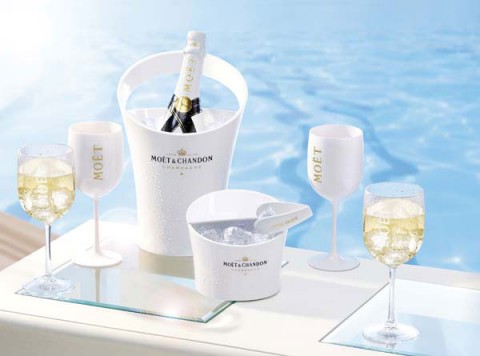
piper-heidsieck-moet-imperial-drink-champagne-with-icechampagne over ice cubes: ideally, the french champagne house piper-heidsieck suggests that champagne and rosé wine get better when served “over ice”- to boost taste. moet and chandon seems to agree as well. go ahead – drink it!

the bubbles and the glass: an initial burst of effervescence occurs when the champagne contacts the dry glass on pouring. these bubbles may form on imperfections in the glass that facilitate nucleation or on cellulose fibres left over from the wiping/drying process as shown by gérard liger-belair, richard marchal, and philippe jeandel with a high-speed video camera. . however, after the initial rush, these naturally occurring imperfections are typically too small to consistently act as nucleation points as the surface tension of the liquid smooths out these minute irregularities.

“contrary to a generally accepted idea, nucleation sites are not located on irregularities of the glass itself. the length-scale of glass and crystal irregularities is far below the critical radius of curvature required for the non-classical heterogeneous nucleation.” g. liger-belair et al

the nucleation sites that act as a source for the ongoing effervescence are not natural imperfections in the glass, but actually occur where the glass has been etched by the manufacturer or the customer. this etching is typically done with acid, a laser, or a glass etching tool from a craft shop to provide nucleation sites for continuous bubble formation (note that not all glasses are etched in this way)

nice fact about bubbles: dom pérignon was originally charged by his superiors at the abbey of hautvillers to get rid of the bubbles since the pressure in the bottles caused many of them to burst in the cellar. as sparkling wine production increased in the early 1700s, cellar workers would have to wear heavy iron mask that resembled a baseball catcher’s mask to prevent injury from spontaneously bursting bottles. the disturbance caused by one bottle’s disintegration could cause a chain reaction, with it being routine for cellars to lose 20-90% of their bottles to instability. the mysterious circumstance surrounding the then unknown process of fermentation and carbonic gas caused some critics to call the sparkling creations “the devil’s wine”.