 a visual collective outlet of inspiration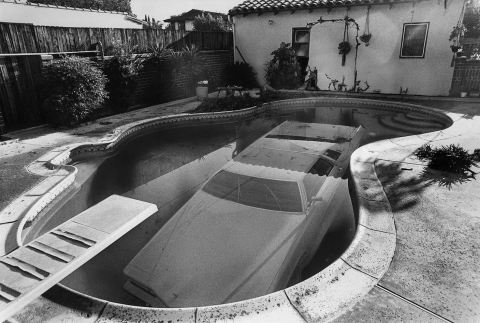
no one ever taught me how to parallel park. by sp
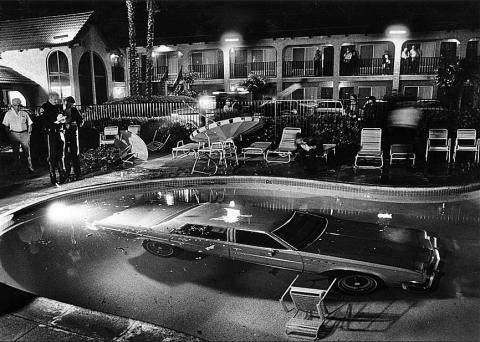
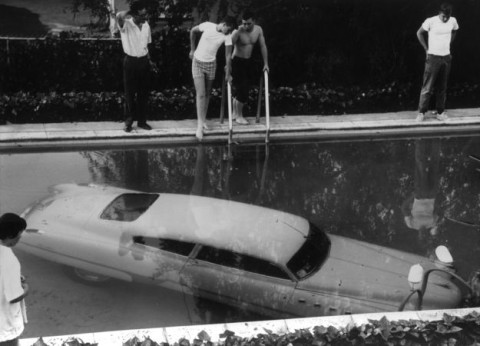
no one ever taught me how to parallel park. by sp
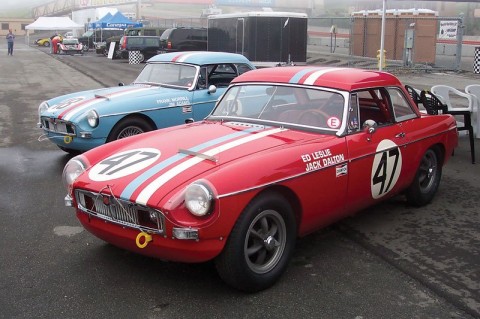
two of the three original MGBs that won the sebring race
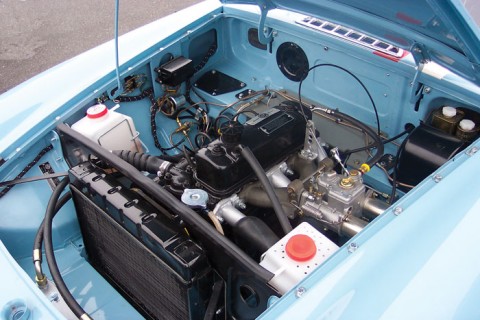
special tuning engine – modified
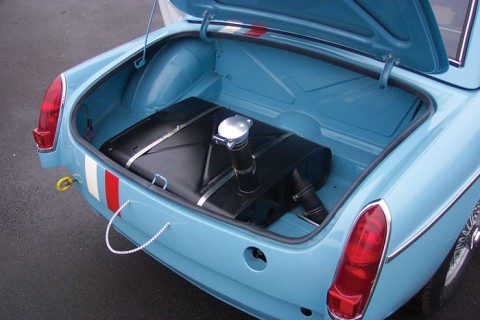
to reduce fueling stops, the MGs were fitted with dual special tuning gas tanks with quick-release le mans-style fuel fillers
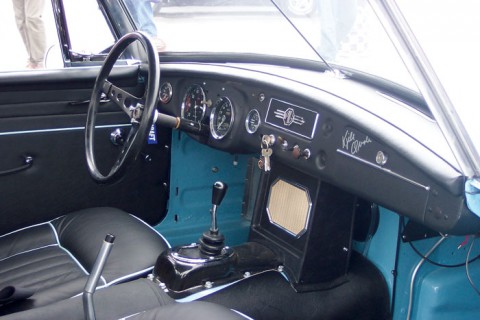
the interiors of the cars were very close to stock in appearance, using the original seats, complete with contrasting piping to match the body color
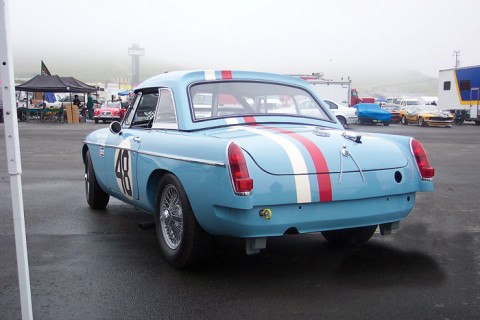
automobile racing was an important part of every automobile company’s marketing program in the ’50s and ’60s. having just introduced its new MGB sports car to the important U.S. market, in the fall of 1962, british motor corporation’s factory team entered two MGBs in the 12 hour florida International grand prix of endurance at sebring in early 1963. what is surprising is that not only that the little MGB achieved success in the race in 1964, but that two of the three original MGBs still survive, and have just been restored to the exact specifications in which they raced that year. if you are an MG fan you are probably familiar with these little devils, and if not you should surely check the history out. lovely little cars to zoom about town. by dd
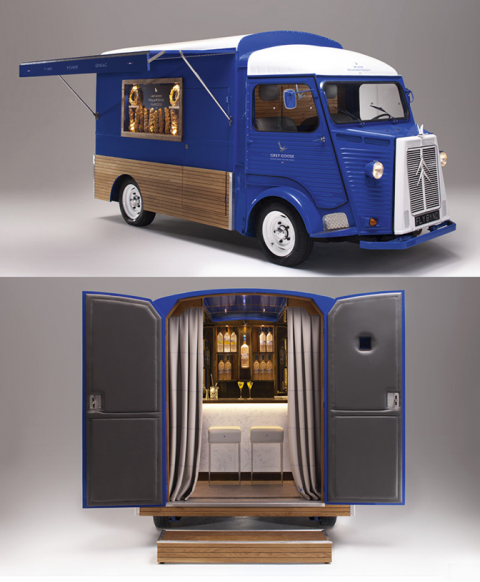
we came across one of the finest bars…and it is on wheels. it is the grey goose pop-up bar, currently cruising the streets of edinburgh, scotland. created by interior designer shayne brady, the truck also serves up breads made by pastry chef christophe michalak.
the ts crew is obviously heading to scotland, see ya! for those of you who will not be crossing the atlantic just to get drunk, just go ahead and try out one of greygoose’s signature cocktails. we suggest the one featured in this post. enjoy and drink responsibly. by kgb
the GREY GOOSE® le citron snowfall martini:
GREY GOOSE® Le Citron 1 ½ Parts
MARTINI® Bianco Vermouth ¾ Part
Fresh Lemon Juice ¾ Part
Honey Syrup (equal parts honey & hot water) ½ Part
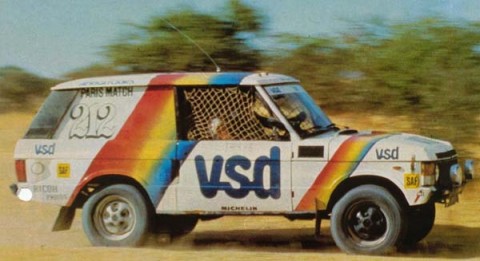
attention all 5 of you slotcar geeks. MSC competition just sent through photos of their all-new africa legends’ range rover that won the 1981 paris to dakar race. the original range rover that became the legend – JE motors

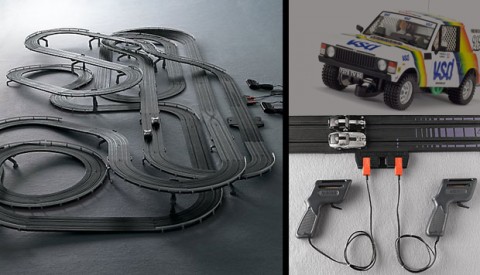
the MSC competition range rover slotcar features a new 4-wheel-drive mechanism and can be raced on any analog 1:32 track
digital chips can potentially be embedded with some scalpels
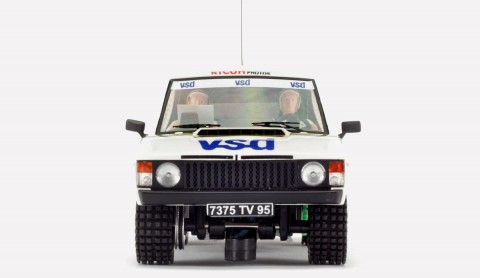
the drivers hard at work. built based on the first edition range rover with the iconic headlamps
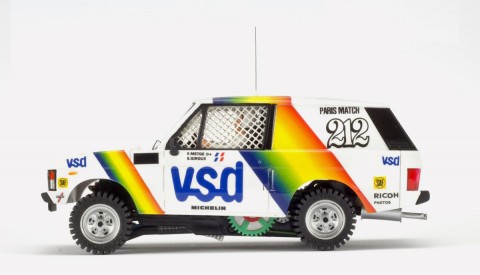
easy does it… here it is before diddy rode one, and before the unfortunate xenon tail and headlights came into vogue
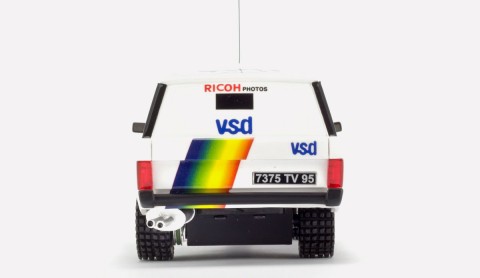
and the beautiful easy back. they just ruined it from there on…
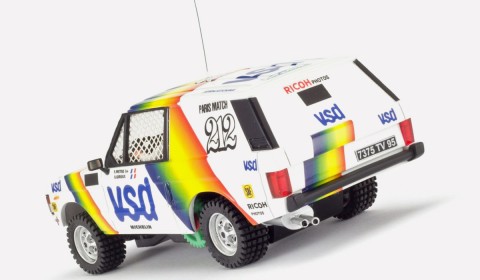
not sure who is still interested in slotcars but we are… and theres good news… MSC competition has just released their all-new africa legends’ range rover that raced in the 1981 paris to dakar. this makes it the only original series range rover produced for slotscar tracks. until now your only option was the later model (series 2 range rover) featured in that lame james bond movie. lets go back to 1981 for a second. 1981 was only the 3rd time in history of the dakar race, and this range rover was driven by bernard giroux and rené metge (see them inside with the map?). what’s special about this historic car release is that it features the all new MSC dakar chassis which looks awesome on any tracks.
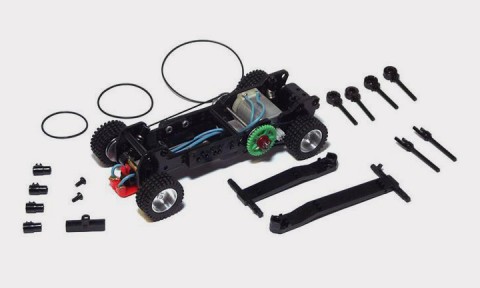
huge drop arm, full suspension and 4WD – detail levels on the resin cast body looks quite acceptable and accurately reflect the tough look and shape of the original range rover series 1. however the green gear wheel sticking out from the original renault chasis is bit of a disappointment and we think this could have been treated in a more elgant manner. but that aside, if you are also a geek… like us… or simply a fan of the original range rover, you’ll enjoy reading this and if you want to put this little one to test you can advance order yours here for 149£. we’d love to get one and test it out next to our citroen 2CV. by uh
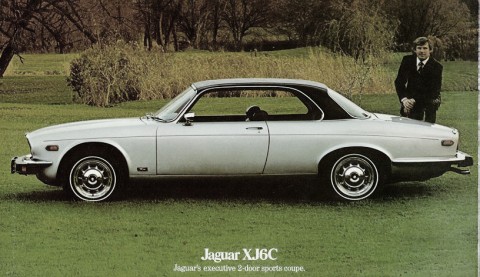
“the xj6c, the rare collectible classic, remains one of, if not the best value for money classic cars available today.”
if there is one car to own before you die it is the jaguar xj6c sports coupe. it is so extremely well proportioned i could call it one of my most favorite cars. its not as famous as the classic e-type series I, II, or II but for me its a lesser appreciated child who is just as smart and handsome. a silver with a black roof will do me just fine. be prepared to change the entire engine, electrical system but otherwise your set to cruise in style.
some history on the xjc: “the xjc is a two door version of the xj6 four door. it was the last jaguar car to be designed and built by sir william lyons. in 1969, he took a reject 2.8 litre rhd xj6 body shell (to become #1 prototype) and fashioned it into the xjc. it was tried with both 4.2 and 5.3 engines with both versions becoming known as xj33 or xj34, depending on which engine was fitted at the time. this number one prototype was supposed to be scrapped but somehow it escaped the crushers. after spending a few years in england it has been fully restored and now resides in western australia.
there was a total of only 10,426 cars produced
the jaguar public would have to wait 4 more years before production xjcs could be seen. they were first shown in september of 1973 at the London motor shows but they had to wait a total of 6 years (1975) for the first production model. prior to going into production about 20 prototypes were hand built in a combination of rhd and lhd. 1973 was the busiest year with 14 of these hand built specials being produced, 8 in lhd and 6 in rhd. the two door coupe is based on the shorter wheelbase xj series l platform. without the central window pillars the coupe body suffered from two main problems, these being structural rigidity and severe wind noise. the widening and strengthening of the rear window pillar overcame the rigidity problem.
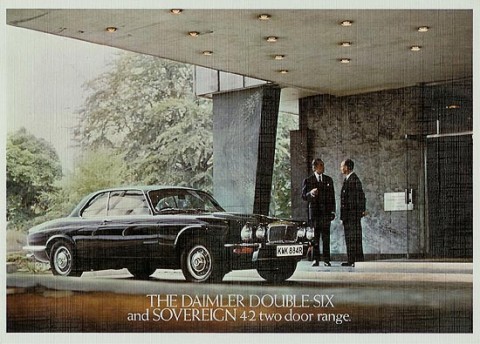 daimler sovereign and the daimler double six
when the xj coupes arrived, they were clearly meant to be the sporty version of the xj models. in the uk, europe, south africa, new zealand and australia they were offered in four versions: jaguar 4.2c; jaguar 5.3c; daimler sovereign and the daimler double six. in the north american market, xjc’s were only offered in two forms and were badged as the jaguar xj6c and jaguar xj12c. daimler xjcs were never imported into the us. another basic difference between the two markets was the bumper bars. north america had large rubber bumper bars to comply with crash regulations, whilst the rest of the world had the full chrome bumpers. in the uk market, air conditioning and a manual transmission were optional, as were the choice of leather or cloth seats. all coupes were equipped with a black vinyl roof as standard equipment, except for the one that was specially produced for jaguars andrew whyte. the actual reason for the standard vinyl roof was not clear, but contrary to urban legend it was not because there was a welded seam in the roof!
most likely it was because the marketing folks insisted on it, as vinyl roofs were the flavor of the month in the automotive industry at that time. whatever the case, many present day owners have chosen to remove this feature. sadly the production of the xjc was all too short. after commencement in 1975 the last of these great vehicles rolled off the line in november 1977. the final 96 coupes were actually badged as 1978 cars – for whatever reason is anybody’s guess. the xjc was a victim of the times and was never really given the attention or backing it deserved. paradoxically this has helped the xjc to become the rare collectible classic it is today, although prices have never reached the dizzy heights achieved by the e type. it remains one of, if not the best value for money classic cars available today. to this day, the xjc is jaguars only two-door fixed head coupe saloon.” by dd
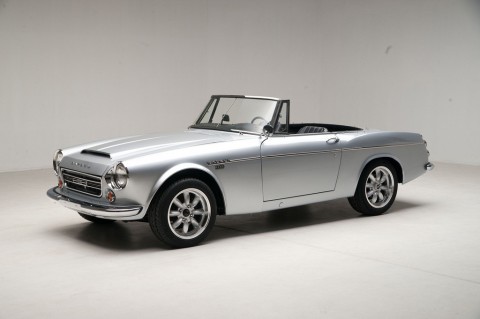
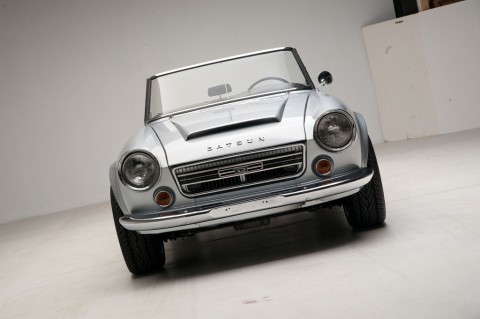
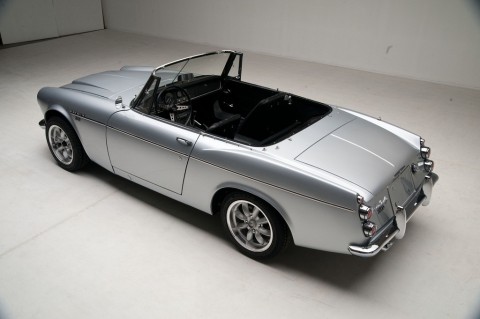
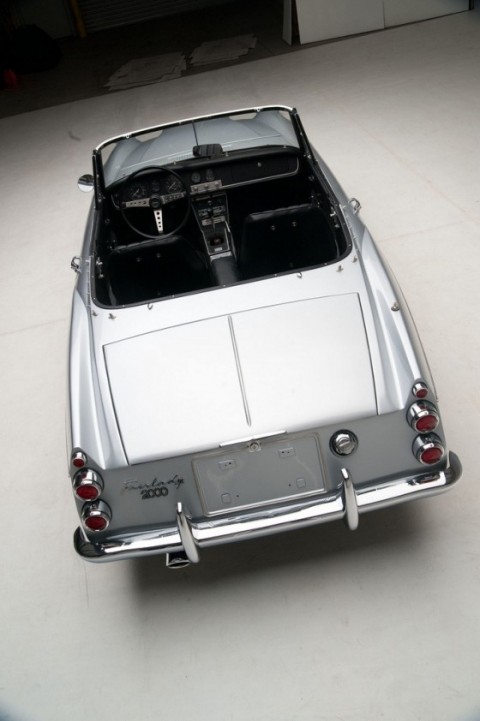
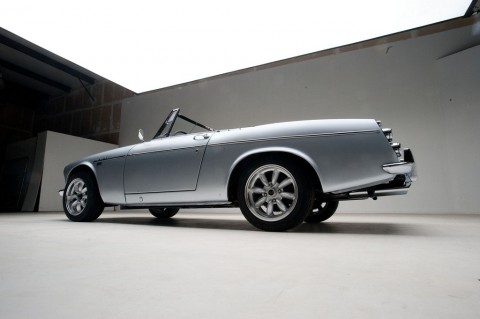
above the 1967 datsun (yes, datsun) fairlady sports 2000
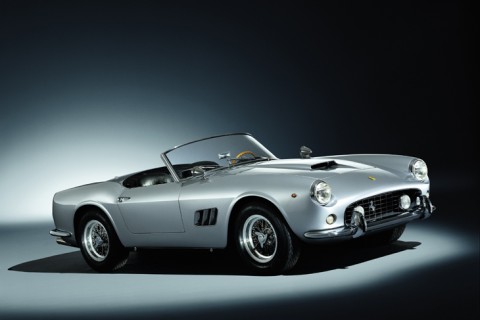
if you can forgive its lame name (fairlady?) that, perhaps, was lost in translation, this was japan’s lovely little answer to the jaguar xj6 and ferrari spyders of the time. it was an inexpensive alternative to the MG, triumph, fiat and the alfa romeos of europe. to me, and enzo will strangle me for this, it was always the baby sister to the ferrari 250GT SWB california spider; the resemblances are uncanny (below with scaglietti coach works). either way, this was one marvelous looking car despite its price. here’s japan vs. the italians, and in this case they both won big. too bad the recent models are so uninspiring… and yes, the datsun’s too. this beauty was on ebay at some point and the “buy it now” price was US$35,000 while the highest bid at the time it was documented was US$18,100. who knows what it actually sold for but either way, what a steal… by dd
below the ferrari 250GT SWB california spyder (scaglietti)
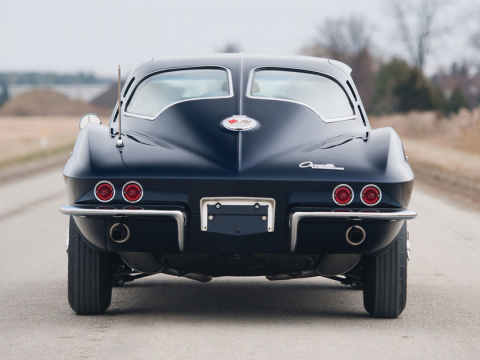
the 1963 ‘fuel injected’ corvette stingray: the most perfect corvette design ever.
the introduction of the 1963 corvette stingray was a seismic event in the sports car world. the first all-new corvette since the two-seater’s debut ten years earlier, the 1963 stingray was both an engineering triumph and a design milestone. the car incorporated a boat-tail taper that was common to sporting roadsters of the 1930s.
the back featured a bugatti atlantique and bertone BAT inspired split rear window. this styling was replaced in 1964 with a single piece because of drivers complaining about visibility problems. the headlights were concealed in the front and would ‘pop’ out when in use.
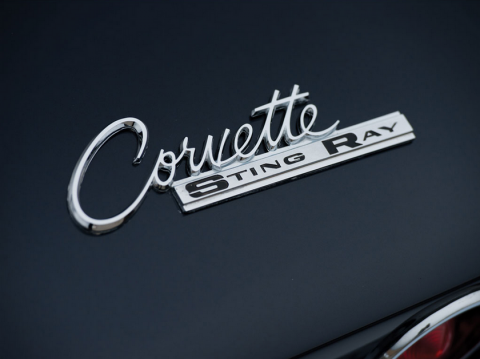
this was the very first time a corvette was available as a hardtop coupe model as well as the traditional convertible. the wheelbase was shortened by four inches to .98 of an inch. this, along with independent rear suspension, improved the handling and maneuverability.
influenced by bill mitchell’s racing stingray and the Q corvette designs from 1957, the new body was an absolute sensation. elements of the Q corvette and the stingray special racer were incorporated into an experimental project called xp-720, which was the design program that led directly to the production of the 1963 corvette stingray.
the new styling was a big hit; its angular body with a minimum of bright work and a distinctive split rear window on the coupe version. this was the first year that corvette offered both convertible and coupe body forms, and nonfunctional vents were featured on both the sides and the hood and it was the only year for the split window.
there are fewer split window models today compared to how many were originally produced, because many owners who found the look controversial removed the split and installed a one-piece, 1964 rear window.
models such as the one seen above have auctioned at over $200,000. by dd
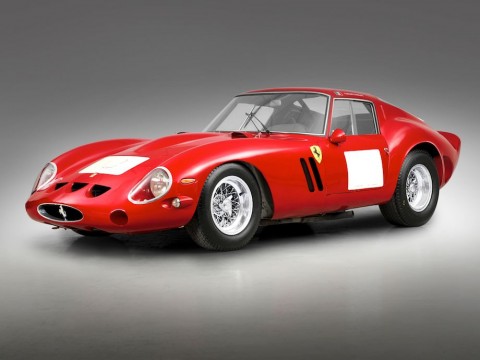
1962 ferrari 250 GTO berlinetta (3851GT) auctioned by bonham, estimated to fetch $50 million. the original before being restored after a crash was grey with red, white and blue center stripes closer to this one below.
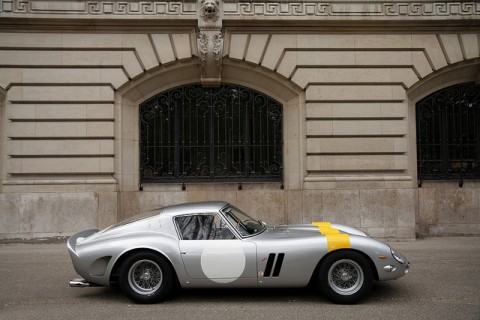
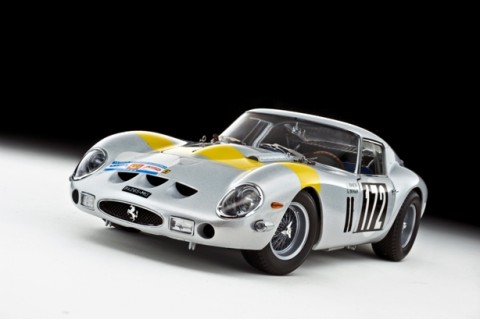
here’s a bit on the story of the infamous GTO… “the most expensive car in the world, expected to fetch over $50 million at auction this week… all told, just 39 examples of this voluptuous coupe were produced. all were built to race, but were theoretically usable on the street by virtue of sports-racing rules that required road versions of competition cars. that regulation, in fact, gave rise to the car’s name: gran turismo omologato — a GT homologated, or sanctioned, for racing. this was partially a white lie by mister enzo ferrari, but read on to see…
race it did–propelling ferrari to the championship in 1962, 1963, and 1964.
surprisingly, the ferrari 250 GTO could be said to owe its existence to britain’s jaguar. in march 1961, ferrari sales manager girolamo gardini watched jaguar unveil the e-type at the geneva motor show and returned to modena, sounding the alarm. “gardini was going around the factory, telling everyone ‘they are going to beat us with their new GT,’” engineer giotto bizzarrini recalled.
surprisingly, the ferrari 250 GTO could be said
to owe its existence to britain’s jaguar below
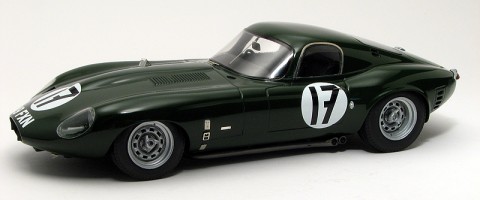
once gardini convinced ferrari of the urgency, enzo instigated a full-court press. bizzarrini was put in charge of the project and operating in complete secrecy; he handpicked several workers and technicians outside normal ferrari circles. bizzarrini’s starting point was the ferrari 250 GT SWB, which he helped develop. a passion for aerodynamics and proper weight distribution caused him to relocate the entire engine behind the front axle. this improved weight balance for better handling while allowing him to create a lower, more-aerodynamic hood line. a new steeply-raked windshield and a hand-formed fastback completed the silhouette.
an intense trial and error period distinguished the prototype’s development. enzo was on the shop floor daily, pushing the men to speed up. bizzarrini’s group worked around the clock, seven days a week. he recalled the many midnight phone calls, the voice on the line telling him, “ingengere, the car is ready for testing.” bizzarrini would drag himself out of bed and, with no regard for hour or weather, complete another series of tests. in september 1961, the prototype was taken to the monza racetrack near milan for its first real tests. an SWB was brought along for comparison. the ferrari GTO was consistently several seconds faster a lap than the ferrari 250 SWB, bizzarrini remembered. two months later, bizzarrini became embroiled in “the walkout.” he found himself on the outside of ferrari, along with fellow engineer carlo chiti, sales manager gardini, and a handful of others.
ferrari promoted mauro forghieri, a young engineer, to complete the ferrari 250 GTO’s development, with stalwart sergio scaglietti assigned to refine the body. in the process, the tail was fitted with a small rear spoiler, as found on the new midengine ferrari 246 SP. the ferrari 250 GTO proved a design pinnacle for front-engine race cars. its 2953cc V-12 featured ferrari testa rossa heads and larger valves, and was topped with an impressive row of six double-barrel weber carburetors. a five-speed transmission replaced the SWB’s four speed. the interior was unusually well-turned-out for a car intended for the track, being roomy and dressed up with chrome-trimmed gauges. indeed, the ferrari 250 GTO’s qualification for GT-class competition revealed much about enzo ferrari’s gamesmanship. the FIA allowed body modifications to already-homologated production cars. ferrari successfully positioned the 250 GTO as simply a modified-body 250 GT SWB. thus, he slipped this limited-production purpose-built competition coupe into a class meant for volume-built sports cars. it was a wolf among lambs.
the first one was sent to florida for the 1962 running of the 12 hours of sebring. phil hill and olivier gendebien won the GT class, and finished second overall. GTOs thereafter were a fixture in the winner’s circle and among the top ten. outright victories came in england at goodwood and in france at auvergne and monthlery, where GTOs took four of the top five spots. at le mans, jean guichet and pierre noblet won the GT class and finished an astounding second overall, their 113.077-mph (182.673km/h) average bettered only by the winning ferrari 330 LM’s 115.245 mph (185.469km/h). other GTOs came in third and sixth on distance. additional second-place finishes that year were turned in at nurburgring and at bidgehampton in america. for ’65, weary rulesmakers doubled the allowable engine displacement in its class, neutralizing the ferrari 250 GTO as a consistent podium threat. this was ferrari’s last successful front-engine race car, and an uncompromised classic.” by ac
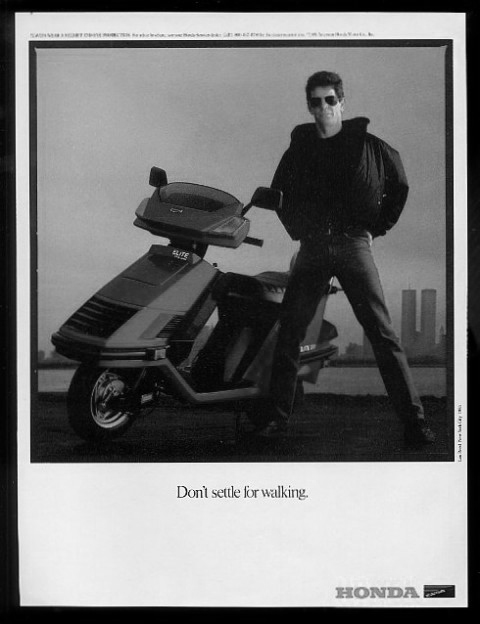
lou reed was a man of oh-so-many talents. including, as we see here, a good pitch. this is the 1985 ad for honda scooters, where lou urges you not to settle for walking, but wherever you travel–make sure it’s somewhere wild. you can see the world trade center in the background of the ad, and the sordid world of manhattan’s lower east side in the commercial. my my, how things change–but lou’s undeniable cool will reign forever! by sv
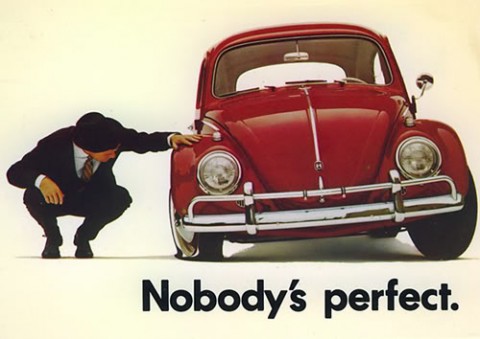
speak for yourself… i’m pretty damn perfect sitting over here. by uh
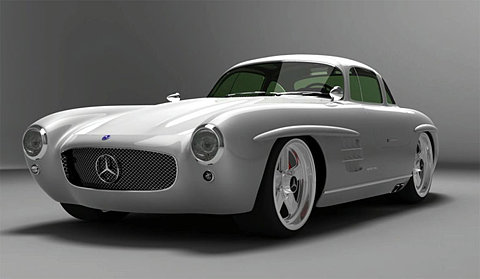 this stripped down custom coup mercedes is the only thing i need, danke. by xy
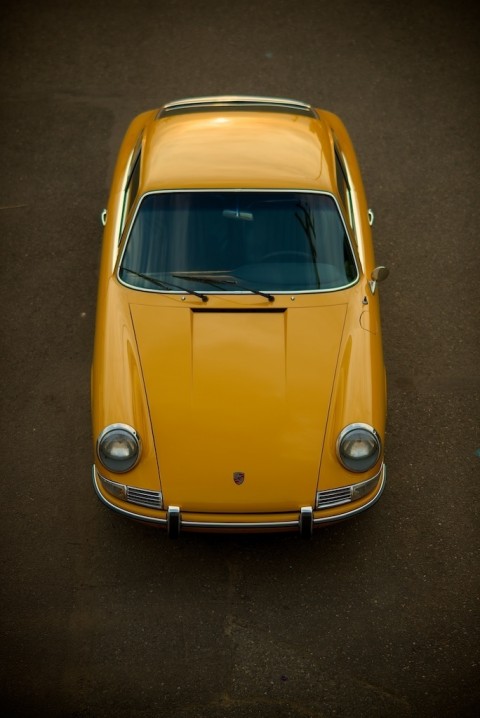 whoever takes me to work with this will be entitled to a kiss. read more about the Porsche 912 here by lil


