this blog is a visual notebook of inspirations for a group of bandit bloggers. we post things we see and like. our lives don’t revolve around singular topics and neither does our blog. sorry! nothing is in-or-out of context here. enjoy xx
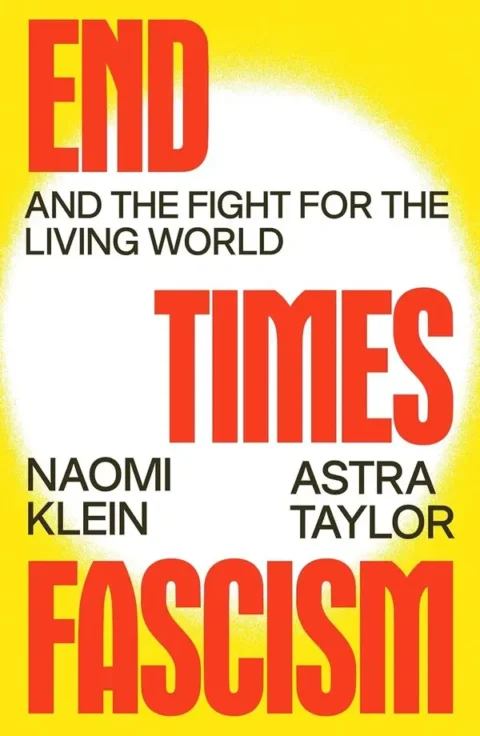
the book: end time fascism, and the fight for the living world : a book by naomi klein and astra taylor
buy it here dont buy from amazonbookshop.org: lets you designate a specific local indie bookstore to receive the full profit from your purchase, or pool profits to support independent shops nationwide.
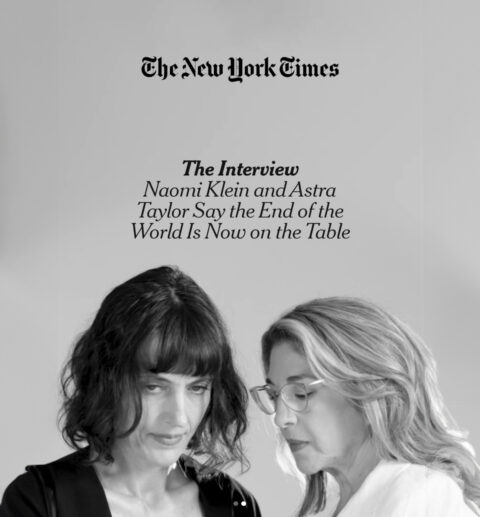
interview on the topics from the only news channel worthy of watching : democracy now with the incredible amy goodman p. s. new york times is unfortunately completely compromised and no longer has any credibility. zero.
interview with naomi klein and astra tayloron democracy now
now that were on the ai topic here is a scathing investigation into the apocalyptic thinking of the christian nationalists, tech-bro reactionaries, and populist survivalists who increasingly define the contemporary right—and a recipe for how to fight them.
as the planet burns and shared reality melts, a new iteration of the far right is on the march. how can we understand this dangerous new development, and what resources can we draw on to resist it? in their scathing assessment of the contemporary scene, the celebrated activists and authors naomi klein and astra taylor explore how the religious fundamentalists, silicon valley technologists, and ethno-nationalists who make up this apocalyptic alliance share more than one might think:
they are united in their belief that some kind of cleansing cataclysm is coming, whether through the manifestation of messianic prophecy, the rampages of a resource- and job-consuming artificial intelligence, or the purported existential threat of immigration and cultural replacement. rather than avoiding this conflagration, they welcome it, convinced they will be among the saved on the other side. by xy
mkultra operation mockingbird uss liberty incident gulf of tonkin incident operation northwoods operation paperclip operation mongoose iran–contra affair phoenix program cointelpro project chaos extraordinary rendition jfk assassination operation gladio iranian coup (1953) chilean coup (1973) afghan mujahideen support crack cocaine allegations mass surveillance programs weather manipulation programs ufo/uap secrecy programs psychological operations experiments deep state operations
if you are looking for things to research, here are some topics that’ll get your brain rollin’. oh and by the way, the cia helped popularize the pejorative use of the term “conspiracy theory” in the late 1960s to discredit critics of the warren commission’s conclusion that lee harvey oswald acted alone… by tnt
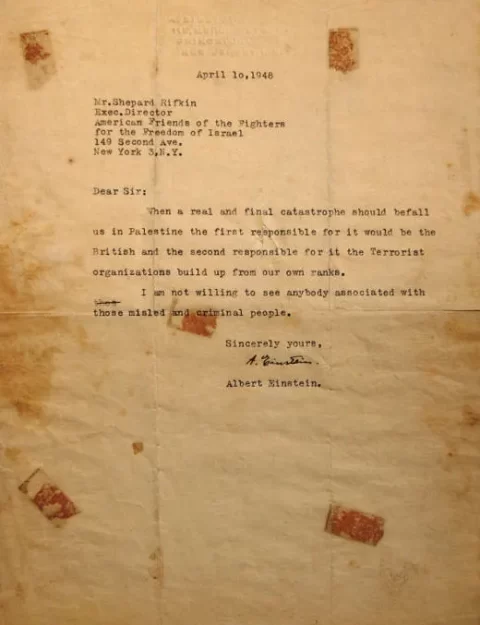
“on april 9th, 1948, a month before israel declared independence, just over one hundred residents of deir yassin were massacred by members of two militant zionist groups – lehi and irgun – as part of an effort to cleanse the area of its arab population. the next day, albert einstein wrote the following passionate letter” pictured above:
“…i’m not willing to see anybody associated with those misled and criminal people” letter from einstein to american friends of the fighters for the freedom of israel. reference from letters of note.
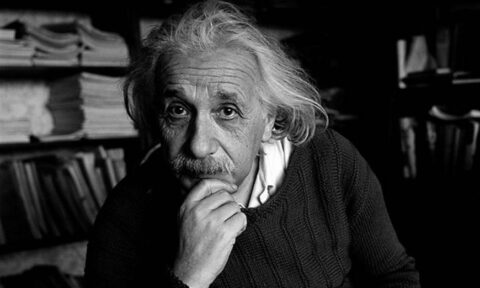
albert einstein was german of jewish decent and staunchly opposed to the policies of the nazi government. he renounced his german citizenship and permanently relocated to the united states, becoming an american citizen in 1940. though he held a generally positive view of his newly adopted country’s culture and values, he frequently objected to the systematic mistreatment of black people.
albert einstein had a complex relationship with israel and zionism. while he believed in the early stages of socialist zionism he rejected the establishments of jewish state in palestine and exclusion of its arab residents.
in 1952 einstein was offered the presidency of israel but declined. einstein supported the idea of a jewish homeland where jews could live in peace, and a way to resettle jews from the mistreatment of europeans, in the middle east. but einstein opposed the creation of “a jewish state” flagging concerns with its arab residents. he was opposed to the idea of a jewish state “with borders, an army, and a measure of temporal power”. he was against nationalism, and felt that the creation of “a jewish state” went against his values.
he testified before the “anglo-american inquiry commission on palestine” and he supported a bi-national status in palestine with free immigration. einstein condemned the massacre at deir yassin and called, the zionist leader and founder of likud party, menachim begin (who later became the 6th prime minister of israel serving form 1977-1983) a fascist. in large einstein favoured the principles of socialism, asserting that it was an ideological system that fixed what he perceived as the inherent societal shortcomings of capitalism.” lot to digest more sources to read. by xy
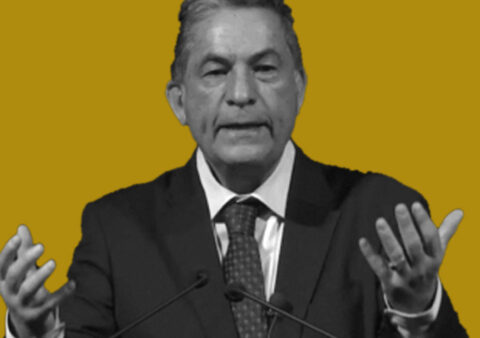
well they are not all media channels, but we think these people are some of the most insightful parties on the youtube regarding world events. you might enjoy checking them out…
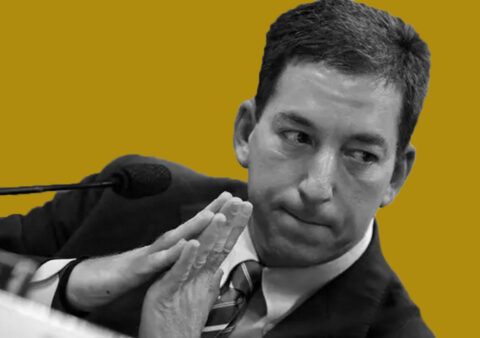
1. LINK: Glenn Greenwald – journalist, constitutional and civil rights lawyer
Greenwald is an American journalist and was born in Queens in New York City. Greenwald is Jewish, but has said his “moral precepts aren’t informed in any way by religious doctrine”. Greenwald founded a law firm concentrating on First Amendment litigation. Greenwald is the journalist who helped break the story of Edward Snowden’s leaks about U.S. government surveillance in 2013, The NSA fiasco… a collaboration that led to a Pulitzer Prize for public service as well as harassment and aggressive scrutiny from the US government and its allies over his reporting on documents leaked.
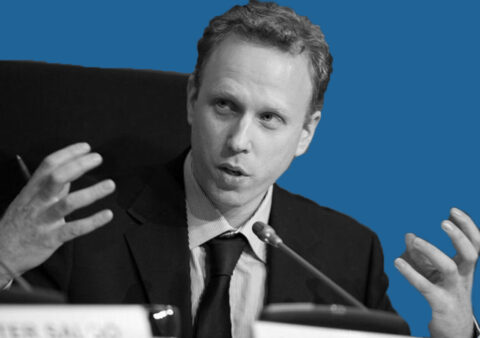
Max Blumenthal is an American journalist, author, blogger, and filmmaker. He was born in Boston, Massachusetts. He is Jewish. His father is a journalist and writer who served as an aide to President Bill Clinton. He graduated from the University of Pennsylvania in 1999 with a Bachelor of Arts degree in history.
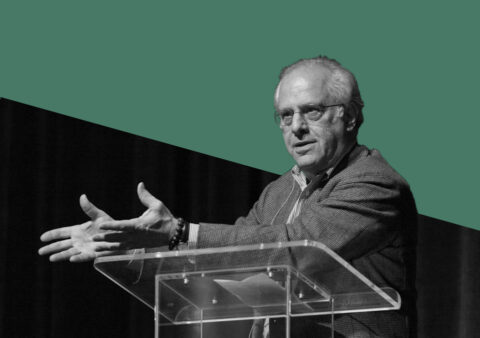
To escape Nazism, Richard David Wolff’s parents, both Jewish German citizens, emigrated to the United States during World War II. Wolff is an American Marxian economist known for his work on economic methodology and class analysis. He is a professor emeritus of economics at the University of Massachusetts Amherst and a visiting professor in the graduate program in international affairs at The New School. Wolff has also taught economics at Yale University, City College of New York, University of Utah, Paris 1 Panthéon-Sorbonne University, and The Brecht Forum in New York City.
4. LINK: Ben Norton – Geo political economy podcast
Benjamin Norton is a US-born journalist currently living in China. His known affiliations are political rather than religious. His religion if any, is unknown. He spent 5 years at The Grayzone but left in January 2022 to become independent. Norton is known to be an opponent to CIA-funded “compatible left”. He is also an anti-imperialist, having opposed US’s expansionist policies.
Roy Casagranda holds a PhD and specializes in the Middle East, U.S. foreign policy, and Western Civilization. He is often asked about his religion, but he does not publicly identify with one. He is a professor of government at Austin Community College, an author of historical fiction, a public speaker.
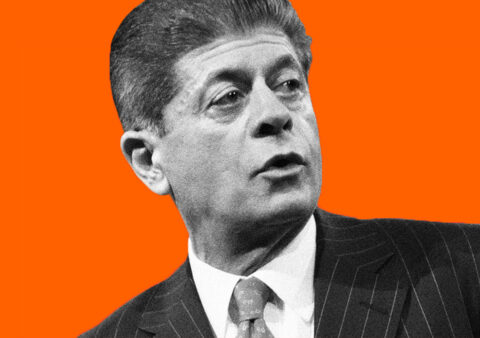
6. LINK: Judge Napolitano – podcast (?) while intelligent he did for a while play the game and contribute to fox news of all things…
Andrew Peter Napolitano is a Catholic American retired judge (New Jersey Superior Court )and syndicated columnist whose work appears in numerous publications, including The Washington Times and Reason. Napolitano served as a New Jersey Superior Court judge from 1987 to 1995. He is a libertarian and has gained prominence in part due to his criticism of the administrations of George W. Bush, Barack Obama, and Donald Trump.
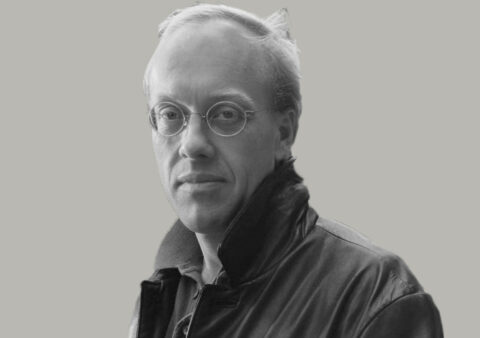
Christopher Lynn Hedges is an Christian (Presbyterian) American journalist, author, commentator and Presbyterian minister. In his early career, Hedges worked as a freelance war correspondent in Central America for The Christian Science Monitor, NPR, and The Dallas Morning News. Hedges reported for The New York Times from 1990 to 2005, and served as the Times Middle East Bureau Chief and Balkan Bureau Chief during the wars in the former Yugoslavia. In 2001, Hedges contributed to The New York Times staff entry that received the 2002 Pulitzer Prize for Explanatory Reporting for the paper’s coverage of global terrorism.
8. LINK: Jeffrey Sachs – Professor economics Columbia University
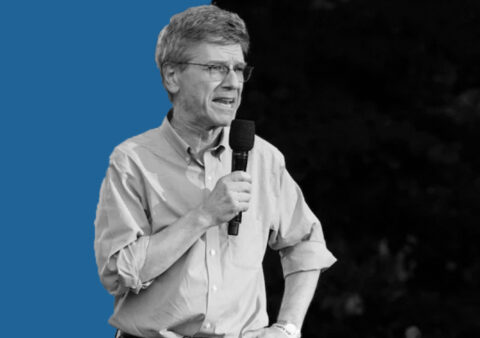
Jeffrey David Sachs was born into a Jewish family. He is an American economist and public policy analyst who is a professor at Columbia University, where he was formerly director of The Earth Institute. He worked on sustainable development and economic development. From 2001 to 2018, Sachs was special advisor to the UN Secretary-General.
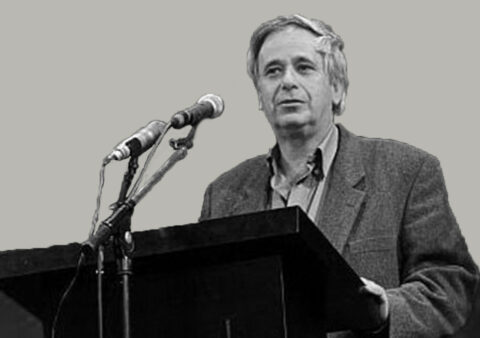
Born in Haifa, Israel, Ilan Pappé was a senior lecturer at the University of Haifa (1984–2007). He is an Israeli historian and political scientist, known for his work on the Israeli–Palestinian conflict and as a leading figure among Israel’s New Historians. He is a professor at the University of Exeter’s College of Social Sciences and International Studies.
10. LINK: Gideon Levy – Israeli journalist , Haaretz paper
Gideom Levy is an Israeli journalist and author. Levy writes opinion pieces and a weekly column for the newspaper Haaretz that often focus on the Israeli occupation of the Palestinian territories. Levy has won prizes for his articles on human rights in the Israeli-occupied territories. In 2021, he won Israel’s top award for journalism, the Sokolov Award.
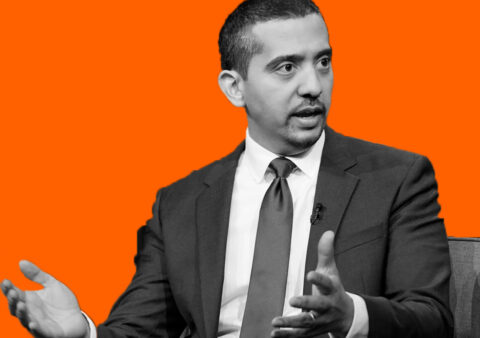
Mehdi Raza Hasan is a British and American broadcaster, writer, journalist. He is a graduate of the University of Oxford in England. Hasan was born to Shia Muslim parents from Hyderabad, in India, his mother a doctor and his father an engineer. Following a stint on the BBC’s The Politics Show, Hasan became deputy executive producer on Sky’s breakfast show Sunrise before moving to Channel 4 as their editor of news and current affairs. He was formerly the political editor of the UK edition of The Huffington Post and the presenter of the Al Jazeera English shows The Café. He now runs Zeteo.
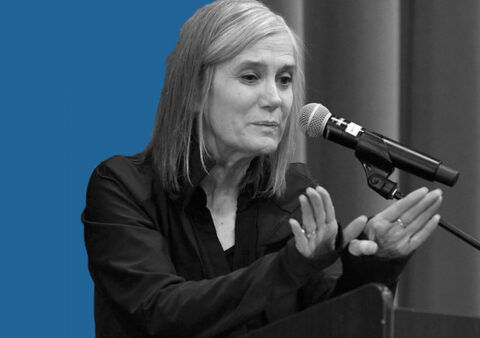
Amy Goodman was born in Bay Shore, New York on Long Island[6] to secular Jewish parents who were active in social action groups. Amy is an American broadcast journalist, syndicated columnist, investigative reporter, and author. She has received awards for her work, including the Thomas Merton Award. Goodman received the Gandhi Peace Award for a “significant contribution to the promotion of an enduring international peace”. she was awarded the I.F. Stone Medal for Journalistic Independence by Harvard University’s Nieman Foundation. She is the author of six books.
ok in the end, it’s the top 12 not the top 10. and there are many many more of course. why is it that top 10 sound better than top 12?
talk to god about that. 12 apostles, 12 months, 12 tribes of Israel, 12 o clock, a dozen, 12″ to a foot – while not all may be works of god, there is something to that 12… enjoy. by ae
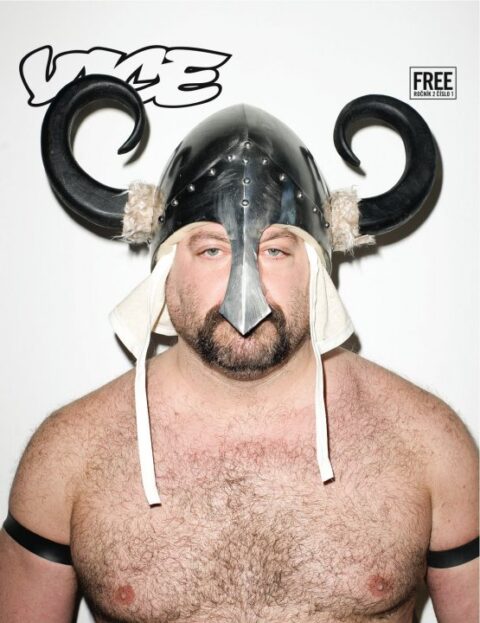
gavin mcinnes cover perhaps? it was all in the making…
racist!… must have been gavin’ cover too
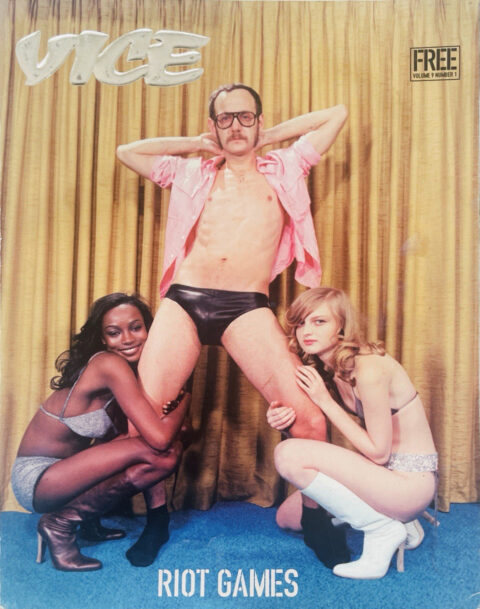
terry richardon before cancellation
also see the books on dos and don’t and history of sex just don’t get em on amazon
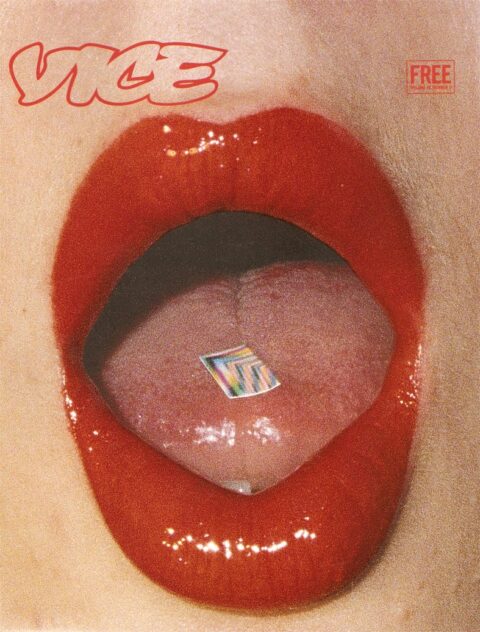
we loved vice magazine in its early days. it was hilarious and kooky. in new york city, we’d pick em up on the corner on our way to work for free… read em, then chuck em.
some issues were so good we’d photocopy articles and mail to friends who lived in less fortunate cities and countries were vice wasn’t available. the article were about sex, drugs, dos and donts, identity, travel, and just about any random thing in any given category you’d least expect. then suddenly we heard vice is bought by CNN… or that’s what i recall. it turns out it wasn’t CNN it happened to be HBO. same shit. it was one of those corporate-lame legacy outlets.
“make the cool guy feel rich, and the rich guy feel cool and you got em”
– vice is broke
a documentary on vice magazines history by eddie huang
for me and so many other that was the end of vice. i don’t think i followed them after that really. every once-in-a-while we’d see a video on youtube about nuclear wolves in chernobyl, or some country on the african continents civil war funded by the west. we wanted to like them but it wasnt the same. the one memorable video from the later versions of vice was with simon ostrovsky in ukraine, who seemed competent enough. atleast, because by now, vice had surely lost all its cool and without simon ostrovsky’s substance there was nothing much left aside with a bunch fart boys.
have a watch. thoroughly enjoyed the documentary “vice is broke” by eddie huang, granted it is first-and-foremost a dis track to shane smith, non the less its a great dive into the past and meeting some of the great people who worked on it in its earlier days. good watch, see it on mubi.com (don’t have mubi? try 7 day free trial, hey its between mubi and criterion, the rest are crap anyway). by uh
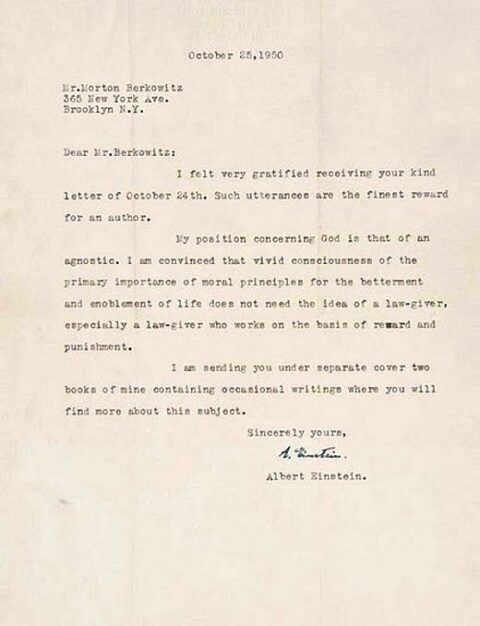
My position concerning God is that of an agnostic. I am convinced that a vivid consciousness of the primary importance of moral principles for the betterment and ennoblement of life does not need the idea of a law-giver, especially a law-giver who works on the basis of reward and punishment.
I’m sending you under separate cover two books of mine containing occasional writings where you will find more about this subject.
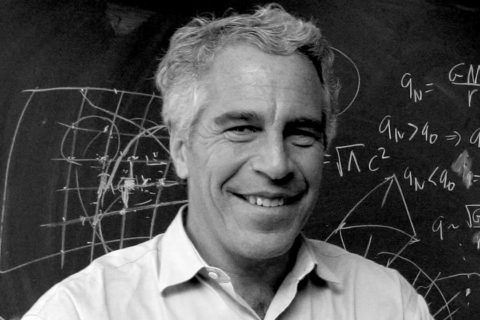
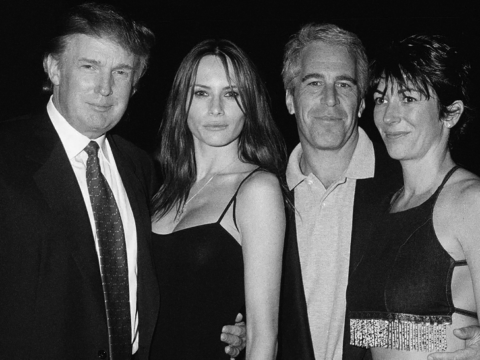
jeffrey epstein “financier” – donald trump, evanka trump, jeffrey epstein, ghislaine maxwell – epstein most likely had dirt on donald trump
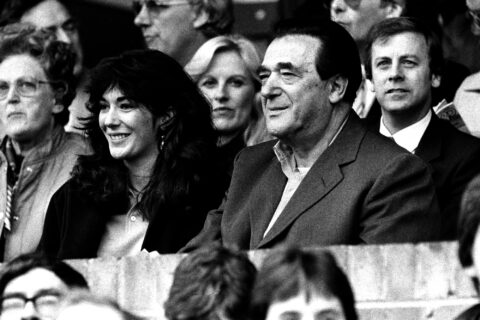
robert maxwell “news mogul” (foreign spy) and her daughter ghislaine
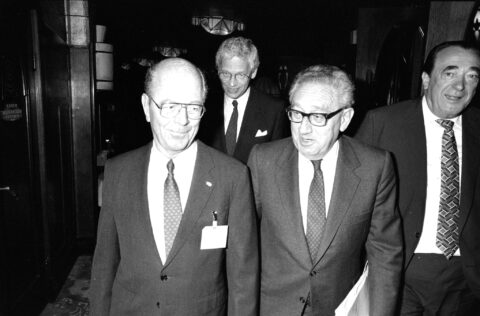
robert maxwell (ghislaine maxwell’s father) henry kissinger
eric weinstein reveals the terrifying story of meeting jeffrey epstein
“what dark secrets lie beneath efjfrey epstein’s web of influence? from intelligence connections to political protection, this episode peels back layers of one of america’s most disturbing scandals.” – judge napolitano
interesting take on who the “disgraced financier” jeffrey epstein really was. a financier who worked with no one (but wexler) and had no trace of investment documents. he was a supposed billionaire who’s wealth vanished after his mysterious death, very much like robert maxwell (ghislaine maxwell’s father) whos wealth disappeared after his mysterious death. he mingled with royalty and elite and documented dirt (honey traps) on each to use as collateral but for what?
eric weinstein (not related to harvery weistein) received his phd in mathematical physics from harvard university in 1992 under the supervision of raoul bott. weinstein left academia after stints at the massachusetts institute of technology (MIT) and the hebrew university of jerusalem. weinstein was invited to a colloquium by mathematician marcus du sautoy at oxford university’s clarendon laboratory in may 2013. you can listen to the full interview here. by xy
“men are more moral than they think, and much more immoral than they can imagine.” – sigmund freud
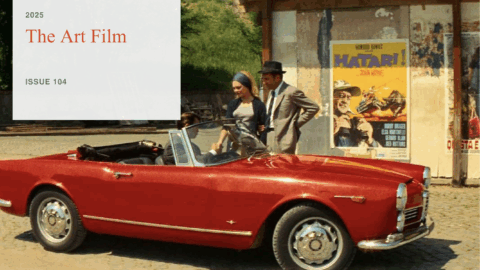
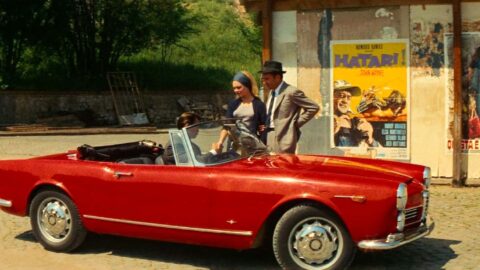
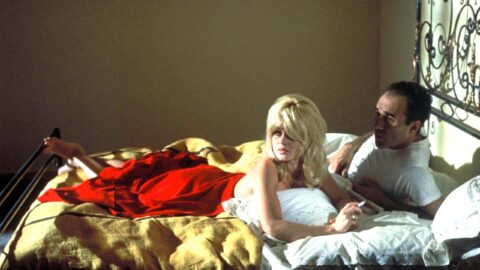
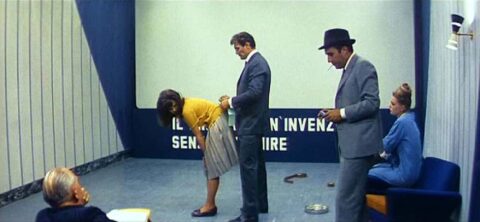
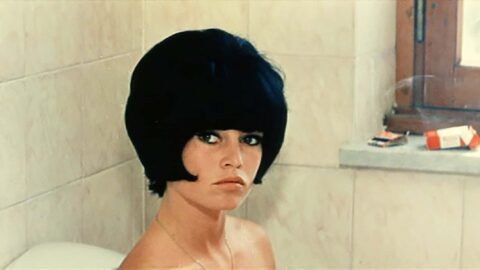
excerpts from cineaction and beautiful write-up by george porcari: “…in the 1960’s jean-luc godard was shifting genres with what seemed like effortless bravado often mimicking the work of different directors. by 1964 it was clear that he had the various film genres – established primarily in hollywood over the previous half century – in his pocket and he made extensive use of them in a quick succession of masterworks throughout the 1960’s that has no equal in film history. godard’s films from the 1960’s comprise 25 features and 8 shorts. while other directors covered a lot of ground in terms of genres – one need only think of howard hawks’ filmography – they never did so in such an intensely concentrated and productive period using the same group of actors and technicians to help them realize that body of work.
godard’s characters in his films from the 1960’s, including le mepris (contempt, 1964) often find that they are in “the wrong film.” this is a typical godardian strategy of displacement – often accomplished with tongue planted firmly in cheek. one thinks of lemmy caution in alphaville, who is the proverbial tough guy detective who comes from raymond chandler’s los angeles and the noir school of american cinema but finds himself caught in a science fiction film set in contemporary paris; or emily brontë who belongs in a bbc biopic but ends up (to her horror) in the wasteland of weekend; or the pimps and gangsters in vivre sa vie, who come from the hardscrabble hollywood gangster films of raoul walsh and melvin leroy but find themselves in a film modeled on carl dryer’s slow, sensitive, metaphysical cinema – even they sense that they are in the wrong film, all dressed up and with nowhere to go.
“i’ve seen the novel of today at the cinema…it’s called le mepris, the novelist is someone named godard.” – louis aragon
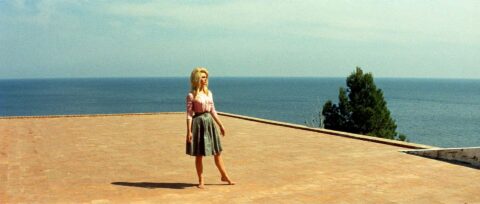
le mepris is a film that mimics michelangelo antonioni’s aesthetic as godard astutely copies antonioni’s oblique modernist framing, mysteriously empty spaces, slow italicized camera pans, and ambiguous shifts in space – with humans never quite sure where they belonged or how they should act. in antonioni’s work the famous “alienation” at hand was always an aftereffect – the main attraction was always the interaction of his beautiful main characters and the strange social world that mankind had created, seemingly ad-hoc – a social space that was, to a degree, efficient, logical, and clean – what french sociologist marc augé called a “non-place” in his “anthropological” study of contemporary (1994) urban life. these “non-places” are often areas of high transit: airports, hospitals, subway stations, parking structures, business parks, and perhaps the most conspicuous of “non-places,” the corporate office. what antonioni noticed was that these “non-places” were strangely ill suited to emotions, spontaneity, sexuality, and human quirks. these spaces required a flattening out of our nature producing a neutered emotional blankness seen to full effect in stanley kubrick’s 2001: a space odyssey. while antonioni was not the first or the only person to notice these sorts of spaces – one need only think, aside from kubrick’s film, of orson welles’s the trial, billy wilder’s the apartment, or jacques tati’s playtime – he was the person who made such spaces a central characteristic in a consistent body of work.
while human factors were never suppressed or controlled by the state in antonioni’s films – as we see in the work of george orwell (1984) or anthony burgess (a clockwork orange)- they were nevertheless managed and directed, but how? was it, as the frankfurt school and michele foucault suggested, controlled by a cabal of conformist cultural producers, a plutocracy, and the state apparatus? or was there a more complex, organic relationship at work? were these emotions and instinctual appetites anachronistic or still in some way relevant, aside from their reproductive function? how does one navigate this new “non-place?” these were the central question at the heart of every antonioni film and godard here takes up these questions.
“modernity possesses antiquity like a nightmare that creeps over it.” – walter benjamin
but while antonioni’s films adhered to a form of neo-classical modernism godard’s work didn’t follow those rules. antonioni’s films were austere, detached, critical, ironic, and moralizing, and godard managed to touch on all of these – sometimes lightly (a married woman) and sometimes bluntly (weekend) – but he also brought with him his own ‘excess baggage.’ his work was full of unruly paradoxes and clashing contradictions that were carefully layered and juxtaposed. le mepris is emotionally extravagant but with a cool, sardonic edge; there is an uneasy tension between symbols and documentary realism, between romantic sincerity and hardheaded irony, between classical quotations and topical jokes; between heartfelt displays and mocking attacks. while le mepris evoked antonioni – as une femme est une femme evoked vincente minelli – godard here was on his own.
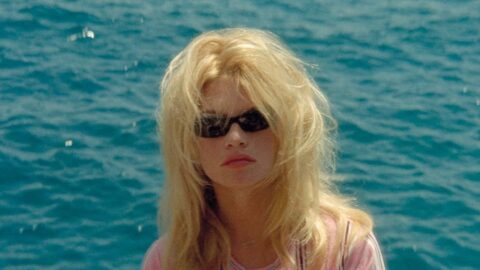
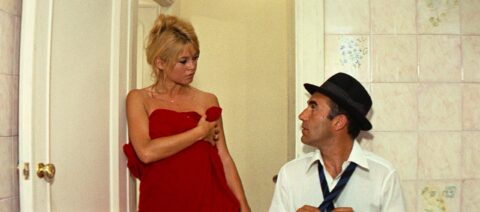
le mepris conjures the mediterranean wide-screen landscapes of l’avventura (1960) but now in technicolor. in this phase of his work godard was contrasting straight from the can primary colors to natural hues. when one thinks of the color of his 60’s work what comes to mind are the extraordinary sequences that take place in the forest and the seaside in pierrot le fou, and are so beautifully contrasted to the city shots painted (by the production designer pierre guffroy) in red, yellow and blue; or the brown and gray landscape of suburban paris, seen outside a train window, in la chinoise, contrasted to the regular use of red throughout the film (presumably signifying communism and/or mao’s little red book); or the beautiful trees in two or three things i know about her, contrasted to the harsh primaries of consumer products and advertising that constantly surround the main characters. but in all of godard’s color work flesh tones always play off primaries, most prominently here a bright yellow towel against brigitte bardot’s flesh in le mepris – a motif that returns twenty years later in prenom carmen.
interestingly the following year from le mepris antonioni would make red desert (1965) that would use color in a similar way, contrasting natural hues with man made primaries, but antonioni’s palette was more traditional. for example the fruit cart painted in shades gray and beige in red desert might be a painting by morandi, one of antonioni’s favorite painters, but an erstwhile traditionalist, and anti-modernist within the schools of post-war art. meanwhile godard’s sensibility was more pop using supermarket colors in a more seemingly random, ironic, offhand way and well within the modernist tradition of sixties art. for example, we can compare godard’s work of the same period with james rosenquist’s f-111 (1964-65), a satire of american consumer society and its military industrial complex (the f-111 was the most sophisticated fighter jet of the time) painted in bright day-glow primaries associated then with car dealerships, supermarkets and advertising. this confluence of godard’s work with pop art would reach an apotheosis with made in usa, two or three things i know about her, and weekend, all from 1967.
brigitte bardot plays camille javal, the disaffected antonioni heroine of l’avventura. they are linked by a crucial scene, that godard quotes later in the film, where monica vitti in antonioni’s film puts on a wig in front of her best friend, that she suddenly comes to resemble – a friend who will soon disappear, suggesting some form of metaphysical transference has taken place. camille’s husband paul (michele piccoli) wears a hat that links him to the american school of cinema, via dean martin’s role in some came running (1958), name checked by paul himself. already their cinematic personas – conferred by their headdress – hint at irreconcilable differences. this is a recurring motif in godard’s work from his first feature a bout de souffle, where, as godard explained himself, jean-paul belmondo’s character was based on the the crime/noir school of american cinema including the harder the fall (seen in poster form) and jean seberg’s character came from a previous film with otto preminger, bonjour tristesse.
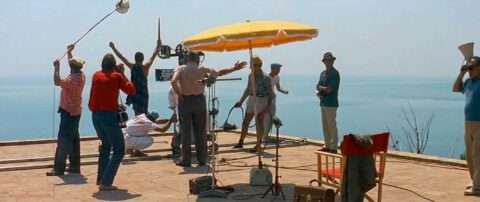
the plot of the disprezzo/le mepris centers around the disintegration of a relationship, of paul and camille, a young recently married couple, who have not been together long. camille is a former secretary/typist and paul is a professional writer and aspiring playwright. paul has been summoned to cinecitta, the fabled film studio in rome, to help doctor a script for a production already under way – an adaptation of the odyssey, the 7th century bc greek poem – being helmed by fritz lang playing himself and jeremy prokosch (jack palance) an american producer. when a script doctor is called for during a production it usually means that there is trouble on the set, as is the case here. paul and camille have recently purchased an expensive apartment they need to pay for so the french couple head to rome…” read the full article at cineaction website, where you can find this and many great article on all the films worth watching. by uh
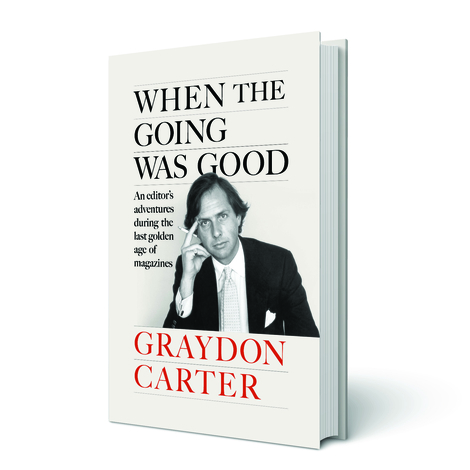
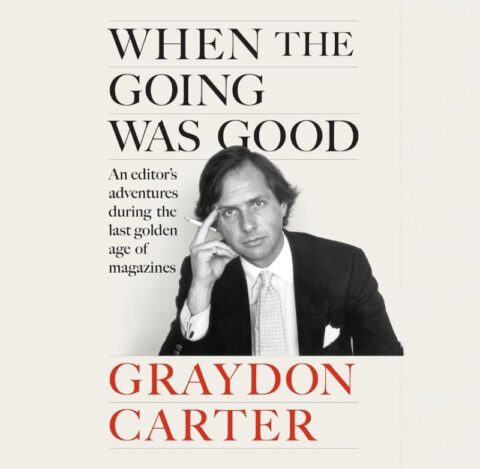
graydon carters recently published memoirs “when the going was good”
the man behind, vanity fair magazines best years, the spy magazine launch, as well producer to the documentary “the kid stays in the picture”. he was the reason vanity fair was worth the paper it was printed on… because lets face it… without graydon vanity fair was nothing but a celeb pop magazine like the rest of the garbage out there. he made it cool, funny, fun, and viciously political with a bourgeois left-tilt that was fit to cover the dinner check.
the last golden age of magazine publishing
LA times writes: “extreme expense-account creativity was looked upon with the same sort of reverence as writing a particularly fine story,” carter writes of his days at time, where he arrived in 1978 as a canadian pup looking to break into the american journalism business. he writes of a colleague who tried to beg out of covering a visit from the pope by inventing some conflicting family vacation plans. his editor suggested he send the family on said vacation and expense it. so the enterprising reporter had some phony letterheads printed up and was promptly reimbursed for the vacation nobody took.
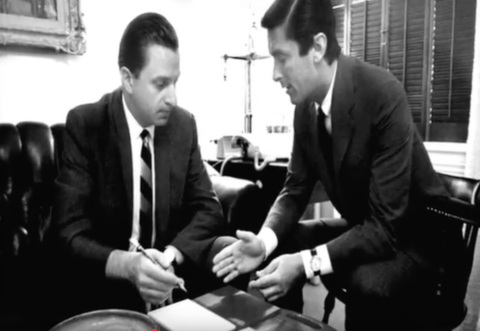
robert evans (note watch) with george weezer
it’s a funny story. it’s also emblematic of a time when magazines had money to burn and muscle to flex. there was no internet, and readers who wanted to be in the know went to these things called newsstands. at time, carter worked with such future stars as a-list biographer walter isaacson and pulitzer-winning book critic michiko kakutani (“michi” to her pals). he ate and drank well, often for free. but he didn’t fit the time mold. “i wasn’t ivy league — a credential the magazine put great store in — and i wasn’t as buttoned-down as some of my peers,” he writes. he was booted over to the still-barely-relevant life, where he plotted the escape that would shake up magazines and new york.
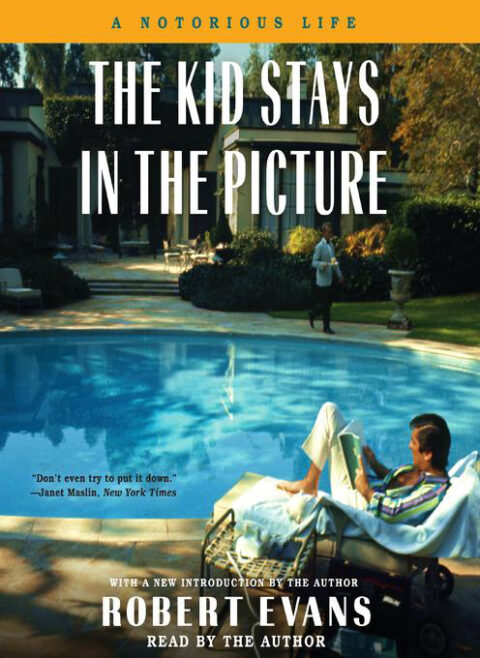
robert evans “the kid stays in the picture” book. the rights to the book were purchased by graydon carter and he subsequently produced the documentary with the same name. a great film and worth a watch.
carter wasn’t just non-ivy league; he never even graduated from college. there’s nothing to-the-manor-born about him; one of the book’s liveliest chapters chronicles his time working on a canadian railroad line, sweating elbow-to-elbow with ex-convicts and other misfits with whom he developed camaraderie and a hellacious work ethic. even when he drops names — and you don’t last 25 years as the editor of vanity fair without dropping names — you get the sense that he still can’t believe this is his life. you might not think of humility as a defining graydon carter trait, but that’s part of what comes across here.
clips form the documentary “the kid stays in the picture”
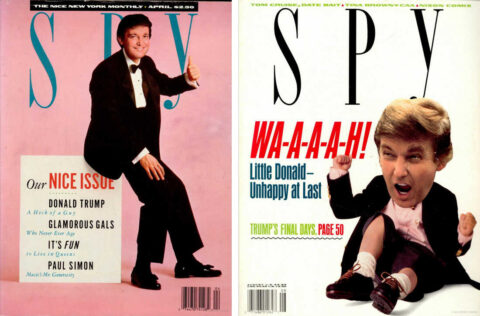
he’s a sort of outsider’s insider, not unlike another canadian who climbed quickly and made his bones in the new york spotlight, “saturday night live” creator (and carter confidant) lorne michaels. a new york native celebrity schmoozer probably wouldn’t have come up with the idea for spy, the satirical monthly that carter created with kurt andersen and tom phillips in 1986.
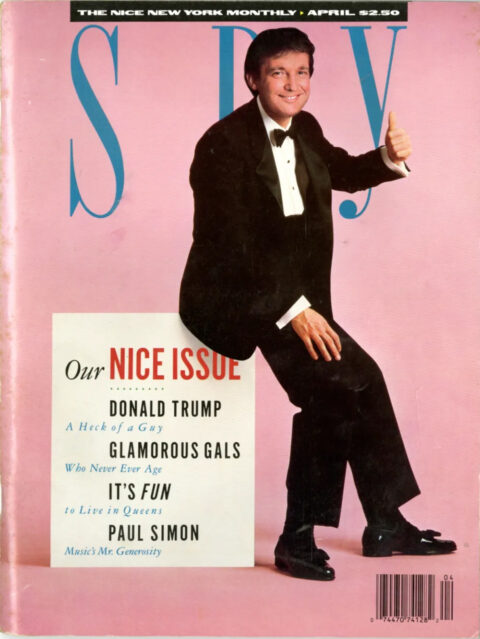
there was nothing like spy, a deeply reported new york gossip magazine with a literary soul and a bottomless sense of mischief. carter and his often underpaid staff came up with devilish nicknames for their primary targets. donald trump, then a bullying real estate player, was “the short-fingered vulgarian.”
spy magazine donald trump cover
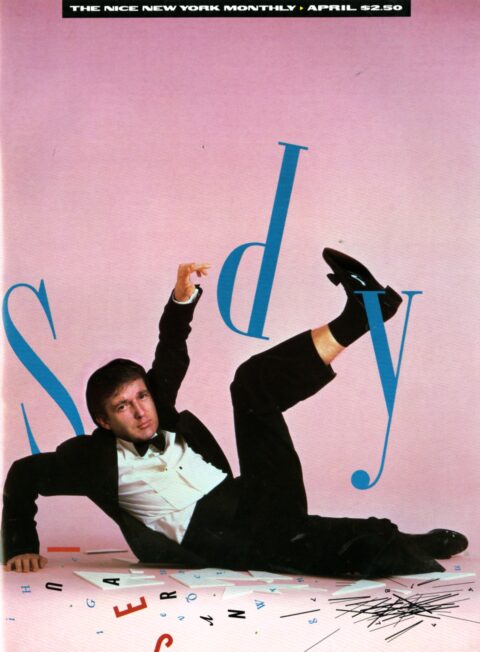
they cultivated inside sources eager to deliver dish on the wealthy and powerful. “we wanted to be outsiders on the ramparts picking off the big shots,” carter writes. “we wanted to champion the underdog and bite the ankle of the overdog.” the only thing worse than landing in spy was not landing in spy.
spy magazine donald trump cover
oh the good old times – before he “grew up”
“when the going was good” is at its best when carter is the underdog biting at ankles, or a don quixote who learns to tilt at the right windmills. spy, for all its buzz, didn’t really translate to monetary reward. carter’s detailed account of the overhead and rigorous scheduling that go into running a magazine is eye-opening, and makes it pretty easy to see why so many glossies didn’t survive the digital transition. even when he started at vanity fair in 1992, carter faced a mighty task, inheriting a staff loyal to his predecessor, tina brown (an insider’s insider). it didn’t help that he had ruthlessly skewered the magazine in the pages of spy. “new editors generally mean changes, and changes can mean unemployment,” carter writes. “when the new editor has spent the past half decade ridiculing the magazine, its senior staff, its contributors, and its house style of over-oxygenated writing, well, that did nothing to lighten the mood. i would have hated me if i was in their place.” and so on… you can read the rest here and pay your dues to the author. thank you chris vognar. by pp
ARPANET: funded by the us department of defense’s advanced research projects agency (arpa), was a pioneering packet-switching network that served as the precursor to the modern internet, enabling interconnected computer communication and resource sharing among researchers
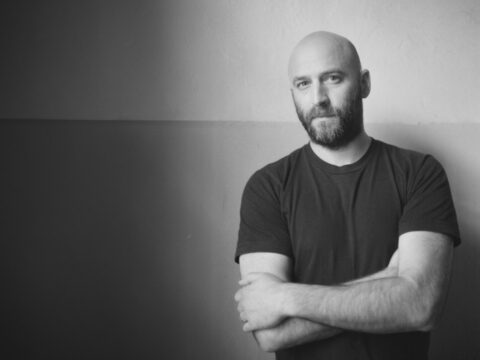
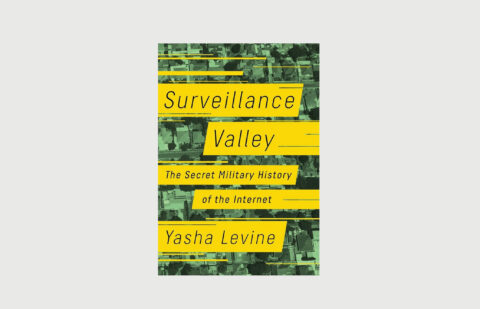
author of the book “surveillance valley” – yasha levine.levine’s family emigrated from the soviet union in 1989 when levine was 8-years-old, he is a russian-american investigative journalist, author and reporter. levine, who was born in the soviet union, was raised in san francisco, CA.
the internet, from its inception, was created as a tool of mass surveillance. yasha levine traces the origins of the web in his book, “surveillance valley,” and how its roots in counter insurgency shape its function today.
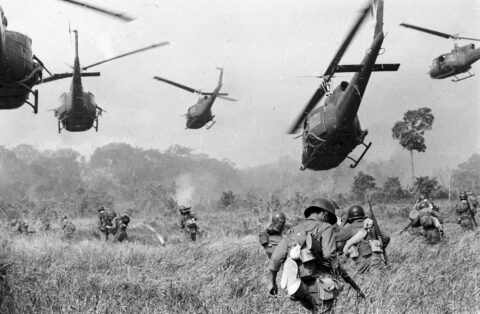
image above: vietnam
the defense communications planning group is a pretty boring name for a secretive group tasked with building one of the most high-tech war surveillance systems ever devised — and that’s no accident. the name, DCPG for short, was intentionally dull to prevent north vietnamese forces from getting too suspicious should they hear about it.
after listening to this you can extract why china developed tiktok to counter the US incursions and why US wants to shut it down or control it… it makes sense…
while some frowned at levines idea of “depicting the likes of amazon as part of a military conspiracy” a conspiracy itself… i think we now know well how google cloud and amazon cloud, and social media have been weaponized and are indeed party to the military surveillance and Ai in a major way. you can read the guardian UKs very negative review of levine’s book here. by dd
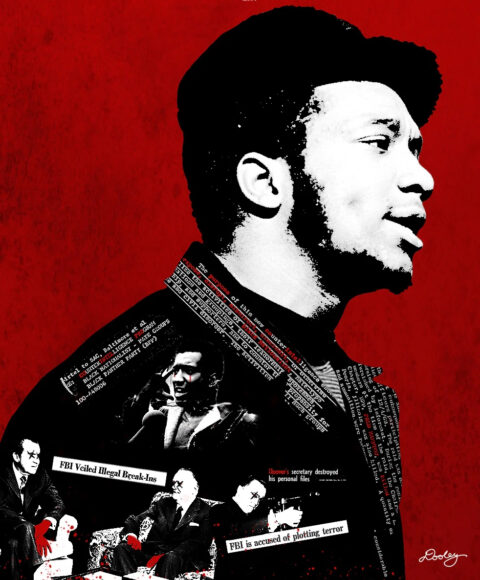
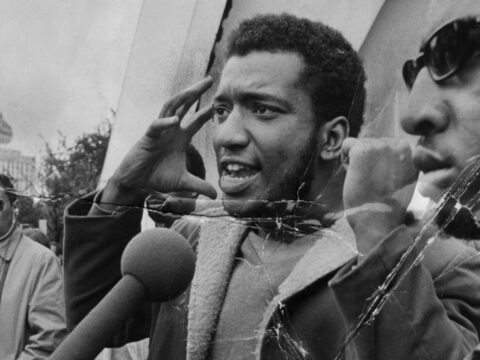
just learned about fred, thanks to amy goodman… heres what i found:
“as a youth, fred hampton was gifted both in the classroom and athletically, and hoped to play center field for the yankees…
at 10 years old, he started hosting weekend breakfasts for other children from the neighborhood, cooking the meals himself in what could be described as a precursor to the panthers’ free breakfast program.
vox: “why the US government murdered fred hampton”
in 1968, hampton was accused of assaulting an ice cream truck driver, stealing $71 worth of ice cream bars, and giving them to kids in the street. he was convicted in may 1969 and served time in prison.
democracy now: “the assassination of fred hampton: new documents reveal involvement of FBI director j. edgar hoover”
we know this is how russia is run, and uganda under amin, and iran, but does this shit happen in france? or in canada? or in norway?
“hampton rose quickly in the BPP based on his organizing skills, and charisma… in 1969, hampton, now deputy chairman of the black panthers party illinois chapter, conducted a meeting condemning sexism. the fbi believed that hampton’s leadership and talent for communication made him a major threat… FBI director j edgar hoover was determined to prevent the formation of a cohesive black movement in the united states. the FBI opened a file on hampton in 1967…
in late 1968, the FBI’s chicago field office recruited william o’neal to work with it; he had recently been arrested twice for interstate car theft and impersonating a federal officer. in exchange for having his felony charges dropped and receiving a monthly stipend, o’neal agreed to infiltrate the BPP as a counterintelligence operative. with oneals help fred hampton was shot in bed, in the head, while drugged and incapacitated from the night before by the imposter, william o’neal, the FBI informant.” i mean wholly shit. they drugged him, and then they shot him in the head, i mean what cowards, what bastards…. assuming all this is true. by xy

 a visual collective outlet of inspiration