
 a visual collective outlet of inspiration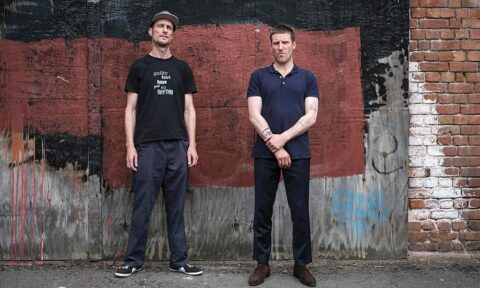
our good friends jason williamson and andrew fearn, google em. god bless. by dd
our good friends jason williamson and andrew fearn, google em. god bless. by dd


vreeland / avedon / vera (veruschka) / vogue
also look for original 1971 documentary “veruschka – poetry of a woman”
veruschka (born vera gottliebe anna von lehndorff) was one of the defining supermodels of the 1960s, standing around 6 ft 3 in (190 cm)—an extraordinary height for a fashion model at the time. born into a prussian aristocratic family, her father was executed by the nazis in 1944 after being linked to the plot to assassinate adolf hitler, a tragedy that profoundly shaped her life. she became famous for her chameleon-like ability to transform her appearance, often using dramatic makeup and body paint to disappear into characters rather than simply model clothes. she also made a memorable cameo in michelangelo antonioni’s materpiece BLOW UP, the iconic 1966 film that captured the era’s fashion scene. in the 1980s, after falling out of fashion’s spotlight, with editors demanding younger and younger models, she reinvented herself as a performance artist, collaborating with photographers on elaborate art photography. along with nico from the velvet underground she was the other tall german “cool girl” in NY. by xy
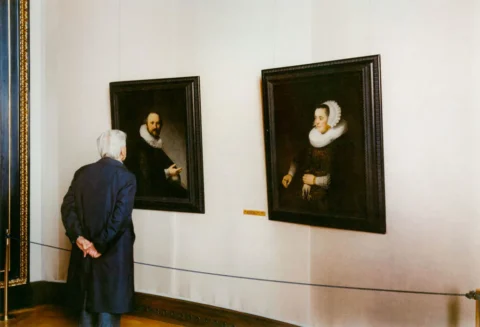
kunsthistorisches museum 3, wien, 1989
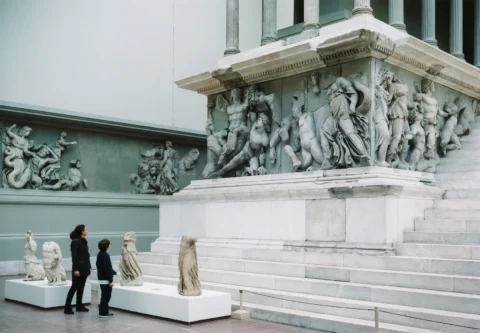
pergamon museum VI, berlin, 2001
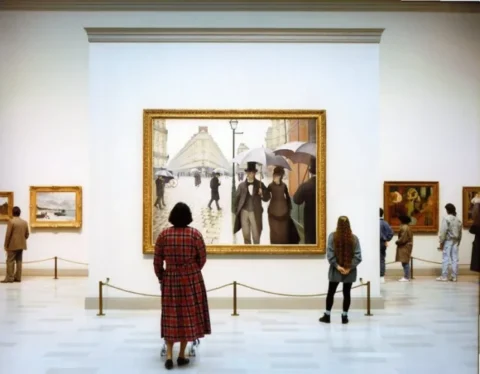
thomas struth, art institute of chicago II, 1990
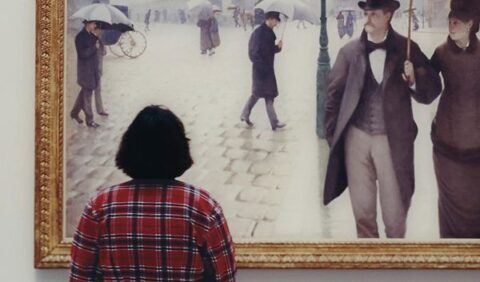
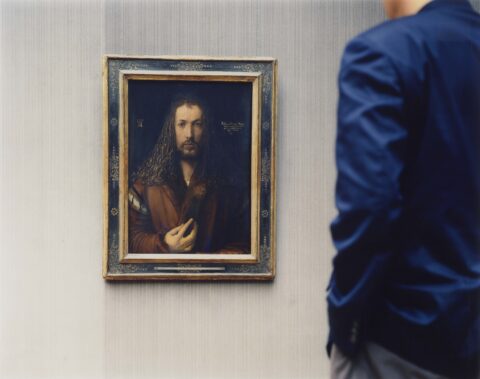
albrecht durer painted his self-portrait in 1500, so struth’s alte pinakothek, self-portrait, munich 2000 feels like a conversation between artists across 500 years. thomas struth/promised gift to the national gallery of art from the collection of robert e. meyerhoff and rheda becker.
german photographer thomas struth is globally famous for his museum photographs series, capturing large, detailed shots of people silently observing iconic masterpieces at institutions like the louvre. for a more playful take, austrian photographer stefan draschan’s people matching artworks features candid images of museum visitors unintentionally matching the colors, patterns, and poses of paintings. by jp

“adam curtis cancels the future” – frieze magazine
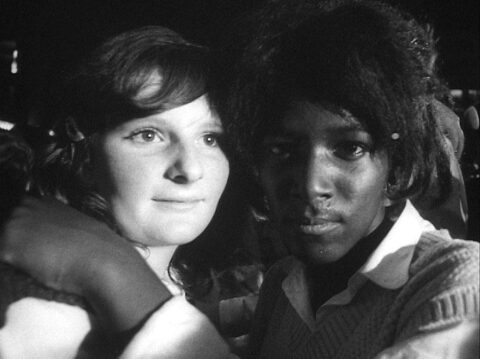
we are living through strange days. across britain, europe and america, societies have become split and polarised. there is anger at the inequality and the ever growing corruption – and a widespread distrust of the elites.
but despite the chaos, there is a paralysis – a sense that no one knows how to escape from this. “can’t get you out of my head” tells how we got to this place. and why both those in power – and we – find it so difficult to move on.
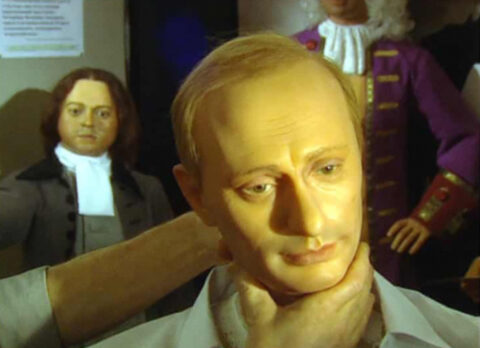
at its heart is the strange story of what happened when people’s inner feelings got mixed up with power in the age of individualism. how the hopes and dreams and uncertainties inside people’s minds met the decaying forces of old power in britain, america, russia and china. what resulted was a block not just in the society – but also inside our own heads – that stops us imagining anything else than this.
if you liked this, head >> here for part 2-8
the primary thesis in adam curtis’s film: can’t get you out of my head, seems to be that individualism has failed us. across eight hours, curtis focuses on different revolutionary figures and those proximate to power and how we have been offered and fed today:
“just another version of you had yesterday… and never a different tomorrow”.
he explores psychology theory and “the psyche of isolation that festers in the suburbs to create a dizzying picture of how we have arrived at such a narcissistic moment in time. curtis suggests that the future has been cancelled because political leaders no longer have ideas for what’s next. instead, he argues, they run campaigns of perception management – a term originated by the us military to describe the manipulation and distribution of selected information into foreign countries.
these control systems move us from states of hysteria and fear to apathy, indignance and then back again. an event back in 2012 like r/wallstreetbets – in which online reddit traders challenged wall street elites at their rigged financial system – is an example of a shock that was momentarily all-consuming then almost forgotten in our minds.
soon, the next shitstorm arrives, and the cycle repeats, but the underlying power structures remain intact. put another way: curtis claims that society today simply reinforces itself, and everything reworks the past – not least the filmmaker himself.” by bb


in film news i just saw koln75 by ido fluk a young german/american director – terrific film about the young woman who organized the famous koln concert by keith jarrett in 1975 and kick started his solo concert career. beautifully done chamber piece for a small cast. by jp
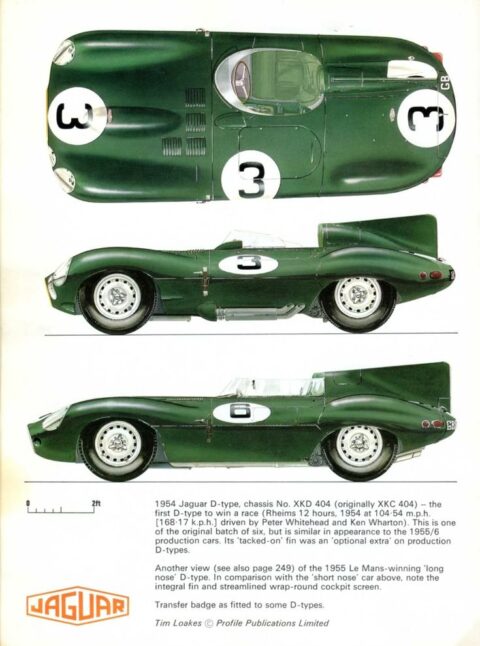
note at the bottom of the top image – the extended 7.5-inch nose. i had no idea that the d-type jaguars came in 2 different versions untill i started bidding on one? right then. the shortnose D-type fetches around $3.5 million while the long nose around $8 million. that said a well documented race winning chassis just went for $21.7 million at RM sothby’s auction.
the legendary jaguar D-type was designed by british aerodynamicist malcolm sayer. the car which won three consecutive races at the 24 hours of le mans in 1955, 1956, and 1957 came in two variations. the shortnose and the later longnose which eventually led to e-type jaguars.
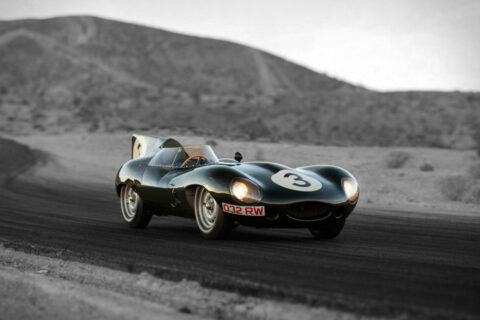
jaguar introduced the “longnose” D-type in 1955 primarily for aerodynamic efficiency, specifically to achieve higher top speeds on the ultra-long mulsanne straight at le mans. the extended 7.5-inch nose reduced drag and improved stability at high speeds compared to the original 1954 “shortnose” version.
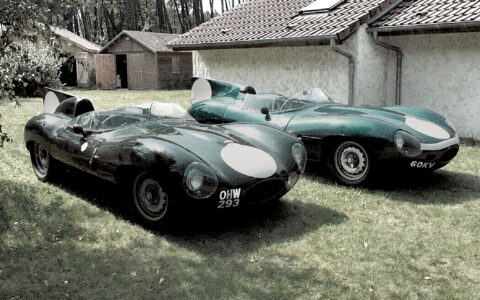
both body styles achieved victory. the short-nose D-type won the 1955 race at le mans, while the long-nose versions (extended aerodynamics) won in both 1956 and 1957… well there you have it… don’t ever get a nose job! by uh