this blog is a visual notebook of inspirations for a group of bandit bloggers. we post things we see and like. our lives don’t revolve around singular topics and neither does our blog. sorry! nothing is in-or-out of context here. enjoy xx
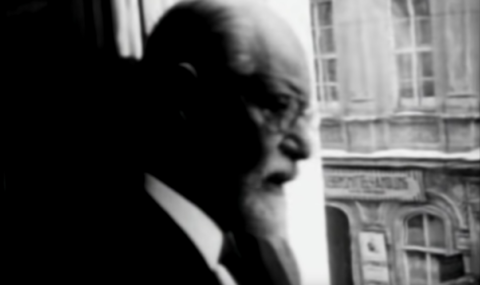
sigmund freud (and his american nephew, edward bernays)
century of the self – adam curtis
leave it to adam curtis to set the records straight. the story of the relationship between sigmund freud and his american nephew, edward bernays. bernays invented the public relations profession in the 1920s and was the first person to take freud’s ideas to manipulate the masses. he showed american corporations how they could make people want things they didn’t need by systematically linking mass-produced goods to their unconscious desires. bernays was one of the main architects of the modern techniques of mass-consumer persuasion, using every trick in the book, from celebrity endorsement and outrageous PR stunts, to eroticising the motorcar. his most notorious coup was breaking the taboo on women smoking by persuading them that cigarettes were a symbol of independence and freedom. but bernays was convinced that this was more than just a way of selling consumer goods. it was a new political idea of how to control the masses. by satisfying the inner irrational desires that his uncle had identified, people could be made happy and thus docile. it was the start of the all-consuming self which has come to dominate today’s world. originally broadcast on 29th april 2002. by uh
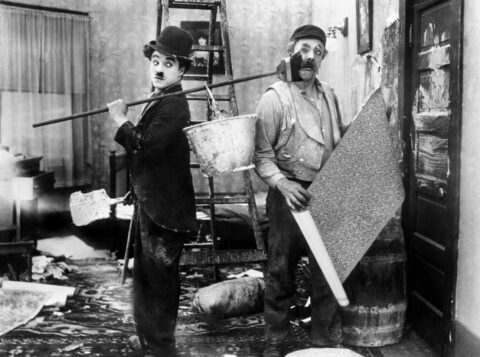
despite charlie chaplin’s statement about his work, and the fact that city lights (1931) does in fact have a park, several policemen and a pretty girl, this film places the issue of class front and center in its opening scene and then plays out that theme, in different variations, for 87 minutes. it begins with some pompous dignitaries in formal dress about to dedicate a larger-than life size neoclassical statue of three figures titled peace and prosperity. the officials consist of politicians, businessmen with their wives, and the police. this is clearly a good cross representation of the ruling class in the us and chaplin beautifully uses them as one collective “straight man.” the crowd behind them – the “little people” – are there as a sounding board, amplifying and physically playing out the symbolic language of the assorted elites at the level of the street. they will presumably carry the message of peace and prosperity to those less fortunate who could not attend.
peace and prosperity is clearly an ironic title considering this was the second year of the great depression. it was also the era where war-drums from europe had found their beat. the nazis would take control of germany within two years and start the war machinery rolling; the japanese and the italians had militarized, nationalist governments ready to use force to realize their economic and colonial ambitions; spanish democracy was withering under the weight of fascist populism; and the americans after wwi were ready to impose a new world order with themselves at the head of the table. many writers, intellectuals, and analysts of the period realized it was only a matter of time before the festering aftermath of wwi exploded, bringing another world war. the thirties were in some respects similar to our era. it was a period defined by political polarization, instability, and rabid disparities of wealth and education; there was also a strong faction of nationalists spinning webs of fantasy, control, and power. this is the context in which peace and prosperity opens city lights.
the statue in the film fits the traditional neoclassical aesthetic, an art form that comes ready made for autocrats and their cronies. that is why during revolutions those statues are among the first things to come down, to be set on fire, to be urinated on, or to be thrown in the nearest river. peace and prosperity presents a tableau with a soldier holding a sword while another man with a hand up signals peace; a young woman dressed in traditional greek robes stands by ready to choose between her two suitors. the tableau espouses male heroism and reason balanced by the eternal mother/fertility goddess as provider, and arbiter, in harmonious balance – a pastiche of european sculpture from an earlier period.
the film was made four years after the advent of sound and is one of the last hybrid films that was shot as a silent with a soundtrack added later. in the early thirties sound and music were considered add-ons to the narrative and chaplin was the first film artist to use sound creatively, re-articulating one of the conventions of music hall and vaudeville – the use of musical instruments to parody human folly. he does it by turning what americans like to call the “boilerplate speech” into music. the society lady is “played” by a piccolo, the overbearing boss is “played” by a trombone, and the mayor is “played” by a kazoo – chaplin brings that technique back for one final go-around before taking a bow… read the full article at cineaction by dd
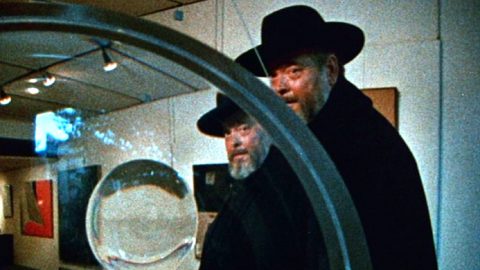
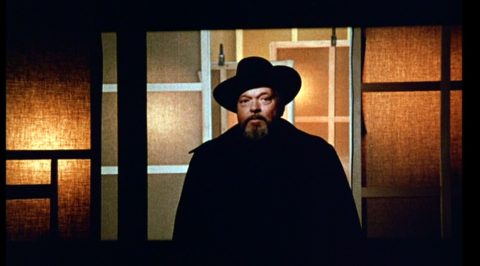
the other side of the wind (TOSTW) appears at first glance to be an overly poetic and precious title – something thought up by f. scott fitzgerald during his tender is the night phase – but the title is a lie that is stated as a fact. there is no “other” side to the wind because natural phenomena do not have sides, their shape is in constant flux and the side depends on the viewer not the event.
the title appears to derive from a statement made by oja kodar, welles’ companion and partner in the screenplay and direction to TOSTW, who said at one point in their long relationship that “now she knew what was on the other side of the wind,” referring to Welles’ habit of wearing a cape that would blow dramatically in the wind – an unusual habit that he picked up in the world of theater, magic and variety shows in the second and third decades of the 20th century that informed his early life in new york and europe.
kodar meant it as a metaphor for having seen beyond the myth of the great artist to the man himself. the self-conscious lie, becoming an unresolved paradox, would be close to welles’ heart as in his previous film f is for fake (1973), (henceforth fake) he delved deeply into the nature of artistic creation, history, narrative, and the mediation and lying that informs them as they engage with the world.
in his acceptance speech to the academy of motion pictures arts and sciences in 1975 for a lifetime achievement award welles described himself as a small family shop in relation to large corporate entities, and that in an ideal world there should be room for both. that he got nowhere in his attempt at a truce with hollywood executives is a given for in a sense they were there not just to praise him but to bury him.
welles refused to lie down, and to add insult to injury he then harangued his powerful and wealthy audience for letting him hang in the wind without giving him a chance. to prove to them that he was still in the game welles showed them a clip from his new work in progress titled TOSTW.
while the work was politely received there were murmurs – clearly the scene was nothing remotely like his masterwork citizen kane (1941), (henceforth kane)– in fact it looked like nothing anyone had seen before and for that particular audience of moguls and stars that was not a good sign. there are few things more terrifying for a conservative audience to see than work that is brilliant and beyond their scope of understanding for it suggests that they are living in a fantasy bubble that has limited their understanding of contemporary reality and works that deal with it. what such an audience wanted was reassurance, and the smart “players” (their own term) in their circle, knew how to provide that kind of aesthetic concoction. welles was, from their point of view, now on the lunatic fringes of the hollywood community – an eccentric older uncle who made wine commercials for television to pay the bills – someone who had spent too much time in europe looking at art and something had gone wrong, some derangement of the senses had unhinged the mind that had made the best hollywood movie ever made at the age of 25. the genius was on the skids and there was nowhere to go but down – after a time there was even a book titled whatever happened to orson welles? …read the rest of the article by george porcari on cine action website. by uh
if you can remember the 80’s, you probably weren’t there!
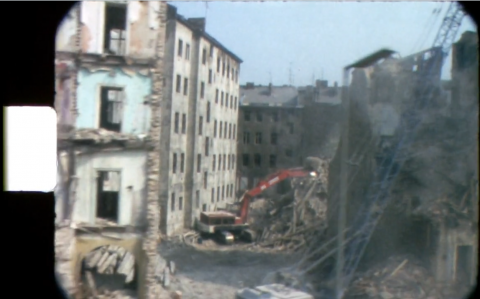
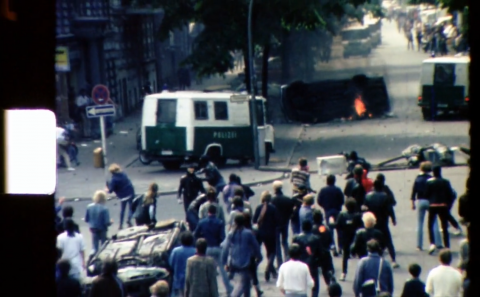
music, art and chaos in the wild west-berlin of the 1980’s
sex
politics
and a fuckin good time – a film by jörg a.hoppe, klaus maeck & heiko lange
see the LF preview above
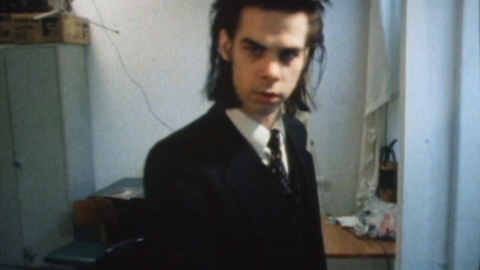
nick cave and the naughty seeds ; )
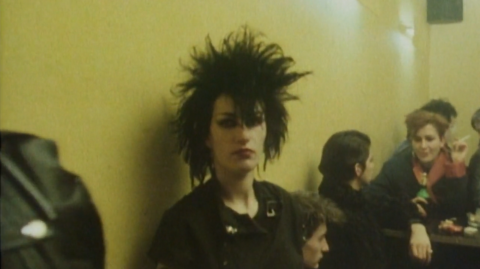
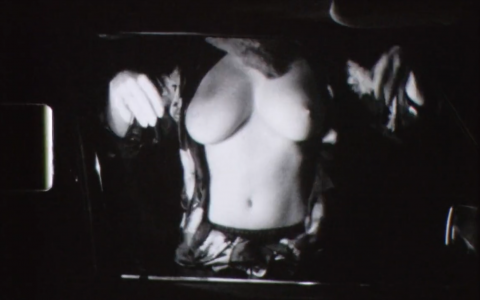
the walled-in city became the creative melting pot for sub- and pop-culture. before the iron curtain fell, everything and anything seemed possible. this documentary film is a fast-paced collage of mostly unreleased film and tv footage from a frenzied but creative decade, starting with punk and ending with the love parade, in a city where the days are short and the nights are endless. where it was not about long-term success, but about living for the moment – the here and now. we need another city like berlin! a must see film if you can get your hands on it. by dd
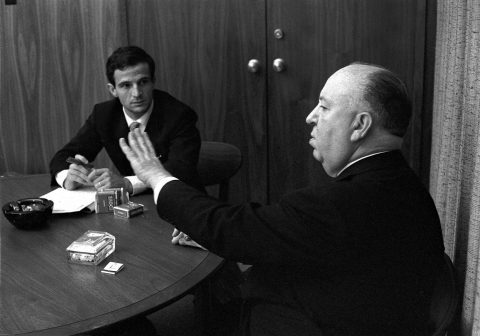
here with francois truffaut on michelangelo antonioni’s blow up
alfred hitchcock said to howard fast (one of his writers). “i’ve just seen antonioni’s blow-up. these italian directors are a century ahead of me in terms of technique! what have i been doing all this time?” by xy
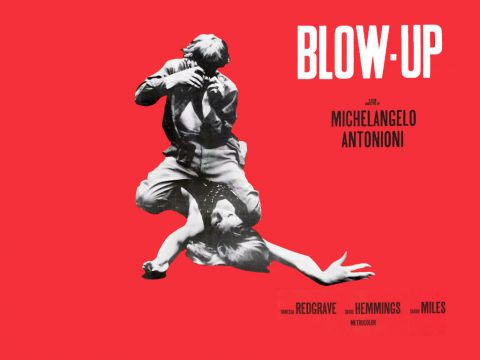
the lingering obsession with antonioni’s 1966 film blow up might have been answered in an upcoming book titled the antonioni adventure by george porcari.
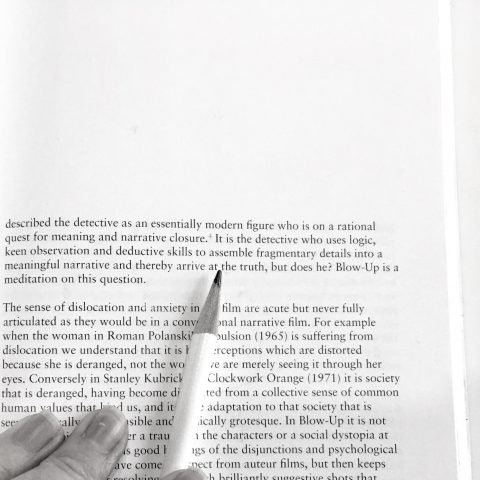
excerpt from page 84 and 85
“siegfried kracauer described the detective as an essentially modern figure who is on a rational quest for meaning and narrative closure. it is the detective who uses logic, keen observation and deductive skills to assemble fragmentary details into a meaningful narrative and thereby arrive at the truth, but does he? blow-up is a meditation on this question.” – george porcari
observing life’s narrative, to search for a truth that may or may not be obtainable, might be exactly what creates intrigue. for me, i can’t help but meditate on that. by jj
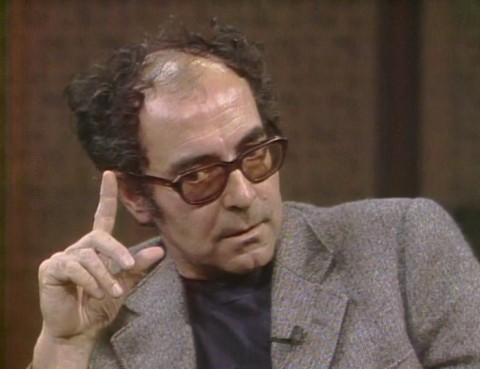
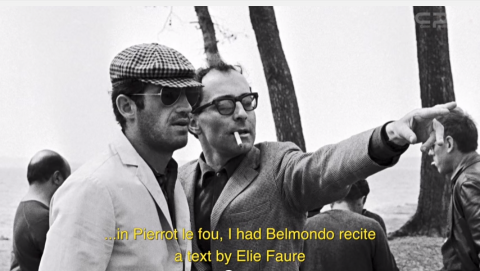
dick cavett interviews GOD himself… jean luc godard in 1980 discussing critics reviews of his film at the time, “every man for himself” a film about the lives of a man (jacques dutronc), a woman (nathalie baye) and a prostitute (isabelle huppert) when they cross paths, classic godard synopsis… maybe this one has an extra 3rd person but otherwise… love this man talking about jerry lewis, howard hawks, and hitchcock and was such a pleasure to see this 30+ years after… uh would appreciate this one. by ac
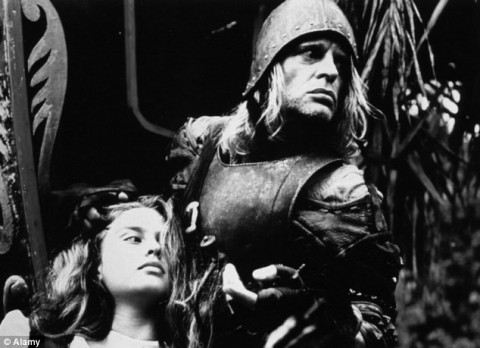
an end clip with kinski playing werner herzog’s aguirre wrath of god. this can be seen as an addendum to dd’s post!!
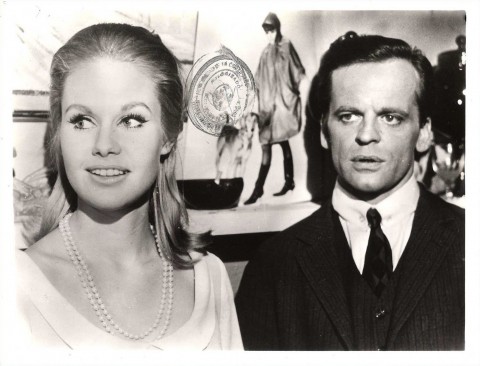
klaus kinski, the epic actor, who played in herzog’s aguirre wrath of god (one of our favorite films of all time – a must see) was a german national of polish decent and born to a struggling family in germany. his father was a failed opera singer, and his mother a nurse. his true name was klaus günter karl nakszynski, which he later changes to klaus kinsky. he was conscripted at age 17 into the german wehrmacht some time in 1943, serving in the army. he saw no action until the winter of 1944, when his unit was transferred to the netherlands. he was wounded and captured by the british army on his second day of combat and was eventually transferred to england as prisoner of war. of course in true kinsky fashion, he recalled the events differently. kinsky claimed that he defected from the german wehrmacht and was court marshaled and sentenced to death. he explained that he theh managed to escaped, and turned himself-in to the british army, but as his recollections on the set of fitzcarraldo he is likely painting a finer picture than what was reality. at the end of the war the german POW’s were anxious to return home. kinski had heard that sick prisoners were to be returned first, and being the nut case that he is, he tried to qualify by standing outside naked at night, drinking urine and eating cigarettes. he remained healthy but finally was returned to germany in 1946, after spending a year and four months in captivity. upon arrival he discovered that his father had died and his mother had perished in the allied bombing. alone, he pursued what he had first experienced under allied imprisonment, acting… and the rest is history. the enigma of klaus kinski still remains. by uh
and just so you all behave… here’s her father, klaus. nice guy, short temper. just ask werner…
image 1: nastassja kinski, daughter of klaus kinski. image 2: a rare picture on location for the film “aguirre wrath of god” by werner herzog. pure genius, go see it if you haven’t, its 2 hours of nastassja walking in the amazon in her bikini… kinda… and then klaus comes in, and kills werner. by dd
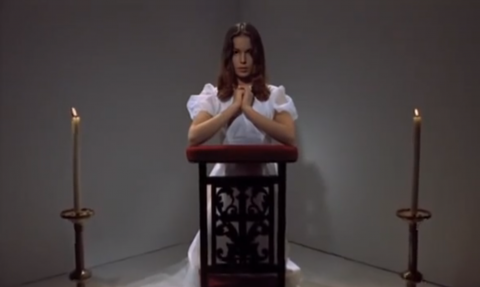
is that anna karina? no but a marie-france pisier. uncanny!
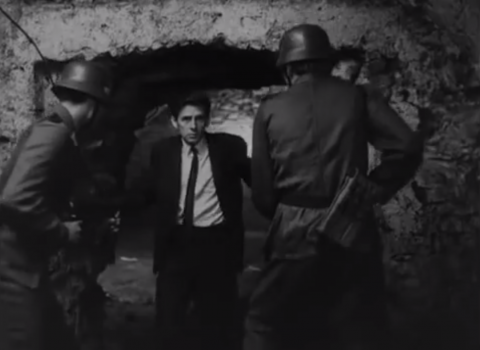
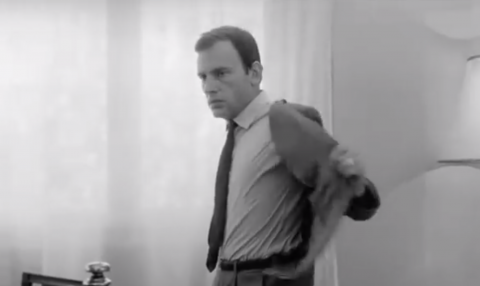
jean-louis trintigant
you may know him for his involvement in “last year at marienbad” but french writer, alain robbe grillet’s classic films were until recently near impossible to buy in the united states, or so i thought until i saw that kino classics (redemption) have re-released not just DVD, but blue ray versions of robbe grillet’s films; “successive slidings of pleasure”, “l’immortelle”, “the man who lies”, “eden and after”, and “n. throws the dice”. my search just now for the films resulted in, just another of his great films “trans europe express“, but no dice on the rest… i reckon they will be available soon as the post i read was teasing the release as late as oct 2014. by uh
so even the god of cinema has succumbed to the 3d camp in his 2014 film “adieu au langage” or “goodbye to language”. or did he? this is godard’s 39th feature film and it does not fail to impress, all this despite his age and a terrible car accident that damaged his scull that contains that god damn genius brain of his.
“the idea,” in godard’s own words, “is simple. a married woman and a single man meet. they love, they argue, fists fly. a dog strays between town and country. the seasons pass. a second film begins…”
i just saw the film finally and have not read about the piece but here are my observations: to me the film is really a 21st century contemporary painting, with a nod to picasso and the cubists, cezanne, and monet. godard uses 3D to recreate cubism for the modern viewer. he flattens the colors to analyze surface and depth and the frame itself. areas painters and artists explored only on canvas. the film is also a child’s curiosity with 3D. it is as if the camera was given to godard who did not know how to use it and he simply did what he could, but in that way, it’s honest and pure unlike anything else in the produced world of cinema and 3D. his experiments will be used for decades to come in the future of cinema… that is to be sure of.
to break with the cliches of new wave, this time he did not have the lovers part ways in the end, and the love story was not about the couples at all but his love story with a dog who has apparently replaced anna karina and his past affairs. the dog in the last frames of the film walks away into the woods, just like his female protagonists did, “but will she return” the voice over beckons? the very last frame is the dog coming towards the camera and the words “and she returns”. proof that godard has not yet lost his sense of dark humor.
one of my favorite sections in the film was how godard reworked his mastery of montage adapting it to the 3D format. godards double exposures are legendary, but in “adieu au langage” he used a new technique. the end result was disorienting as my eyes had never experienced such a thing. i got lost and confused. i had to close one eye and then the other to understand what i was seeing. what godard did was instead of superimposing two images he simply shot each scene with one part of the 3D lens creating a scenario that one eye was seeing one scene and the other a completely different scene (both are of course 2d and flat, disregarding the silly effects of 3D). with both eyes open under the 3d glasses your brain attempted to decode the signals that your eyes were sending it, but it failed to resolve it. closing the scene godard has the man in the right lens enter the scene of the woman in the left lens and using a gradual dissolve he finalizes the phrase and proceeds in conventional 3D. it was simply genius and i sat there with a smile on my face in this empty theater with no more than 4 others at 12:30 midnight. i suppose in the end that is what i can only dream of, to do what godard does to me, to just a handful of people in this world with what ever work it is i’m doing. that is more fulfilling than all the riches of this world. a tough task to accomplish.
of course this all means nothing and you should see the film for your self. it is advisable to see it in theaters and in 3d, however leave it to godard to shoot a 3d film disregarding all the perceived effects of 3D and focus on how best he can capture a flat surface and deconstruct the whole 3D genre. the film is showing at the ICF in new york staring héloise godet, jessica erickson, kamel abdeli, richard chevallier, alexandre païta, and zoé bruneau. do catch it if you can. by dd

 a visual collective outlet of inspiration